
Andragogy Self-Assessment Tool
Are you trying to learn like a child when you should be learning like an adult? Answer the questions below to see where you stand and how to optimize your brain's natural strengths.
Your Profile:
Score: /4 Adult-Learning Indicators
Recommended Strategy
You’ve probably noticed it. You sit down to learn Spanish, and three days later you can’t remember if gato is the cat or the hat. Your six-year-old niece, however, picks up a new word after hearing it once and uses it incorrectly but confidently at dinner. It feels unfair, right? Like your brain has a leak while theirs is a sponge.
But here’s the twist: adults don’t actually learn worse than children. We just learn differently. The idea that kids are superior learners is a myth rooted in how we measure success. Children are great at absorbing raw data without context. Adults are better at connecting dots, solving complex problems, and applying knowledge immediately. If you’re struggling with adult education, it’s likely not because your brain is broken-it’s because you’re trying to learn like a child when you should be learning like an adult.
The Myth of the Sponge Brain
We love the metaphor of the child’s brain as a sponge. It implies passivity-soak it up, and it’s done. But neuroscience tells a different story. Childhood is characterized by high neuroplasticity, which allows for rapid acquisition of language and motor skills through immersion and repetition. However, this comes at a cost: children lack the executive function to organize, critique, or apply what they absorb strategically.
Andragogy, the method and practice of teaching adult learners, flips this script. Malcolm Knowles, who popularized the term in the 1970s, argued that adults are self-directed and bring life experience to the table. Unlike children, who often learn because they have to (school), adults learn because they want to solve a specific problem. This motivation changes everything about how information sticks.
Think about it this way. A child learns to tie their shoes because a teacher says so. An adult learns to code Python because they need to automate a spreadsheet at work. The adult’s brain is primed for relevance. If the lesson doesn’t connect to a real-world need, the adult brain filters it out as noise. The child’s brain, lacking those filters, takes it all in.
Cognitive Architecture: Why Experience Matters
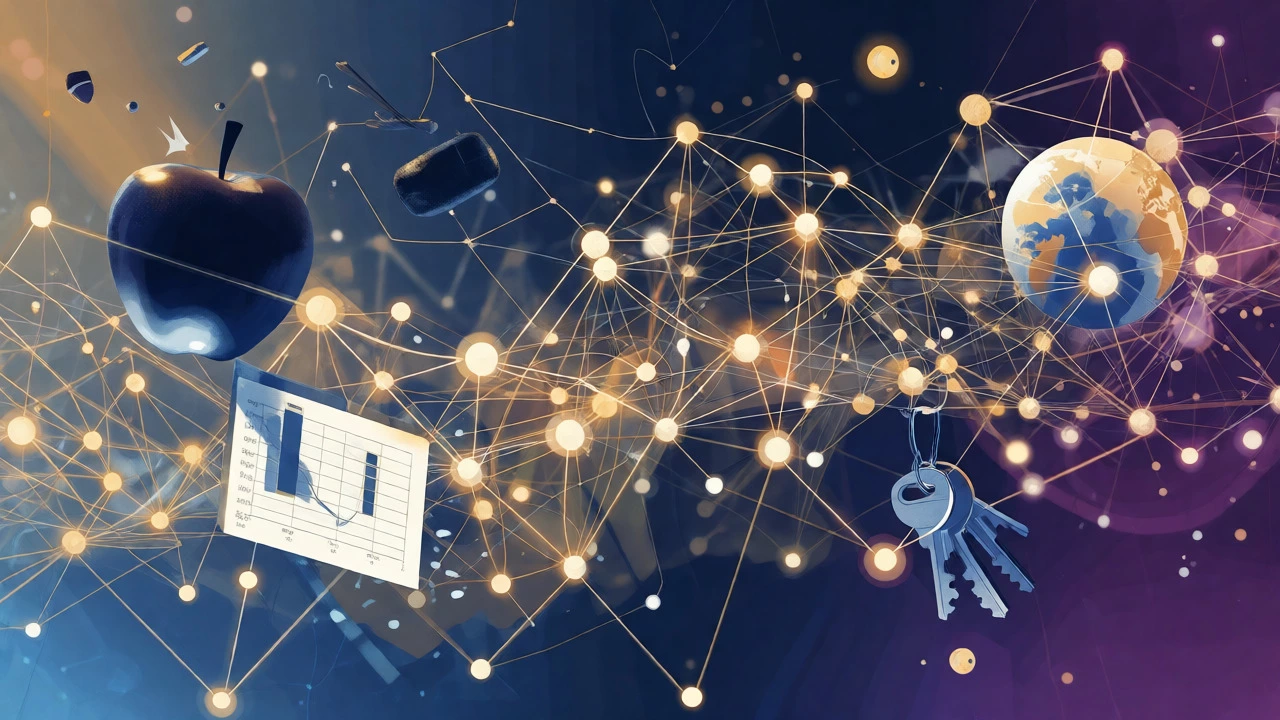
Your past isn’t baggage; it’s scaffolding. One of the biggest differences between adult and child learners is the role of prior knowledge. In cognitive science, this is known as schema theory. When a child learns about "gravity," they are building the concept from scratch. When an adult learns about gravity, they hook it onto existing concepts like dropping keys, falling apples, or even feeling heavy after a big meal.
This makes adult learning faster for complex topics but slower for rote memorization. You can’t easily overwrite old habits, which is why changing your accent in a new language is hard. But you can integrate new facts into a vast web of existing understanding. This is why adults excel at subjects requiring critical thinking, synthesis, and judgment-areas where children struggle simply because they haven’t lived enough yet.
| Attribute | Child Learner (Pedagogy) | Adult Learner (Andragogy) |
|---|---|---|
| Motivation | External (grades, parents, teachers) | Internal (career growth, personal interest) |
| Experience | Minimal; used as a resource for others | Extensive; central to learning process |
| Orientation | Subject-centered (learning math for math's sake) | Problem-centered (learning math to fix budget) |
| Readiness | Determined by age/grade level | Determined by social roles and needs |
| Self-Concept | Dependent on authority figures | Self-directed and autonomous |
The Role of Emotion and Identity
Have you ever felt embarrassed asking a question in a workshop? That’s unique to adulthood. Children generally don’t fear looking stupid. They ask "why" until the teacher wants to scream. Adults, however, carry the weight of identity. We worry about appearing incompetent in front of peers or subordinates.
This emotional barrier is a massive hurdle in adult education. If a training session feels like school-with rows of desks and a lecturer droning on-adults shut down. Their brains interpret the environment as threatening to their professional status. To learn effectively, adults need psychological safety. We need to feel that our experience is respected, not dismissed. This is why peer-to-peer learning often works better than top-down instruction for grown-ups. Talking to someone who has "been there" validates your struggle and lowers the anxiety barrier.
Practical Strategies for the Adult Brain
If you accept that your brain works differently, you can stop fighting it. Here is how to hack your own learning process using principles of Lifelong Learning.
- Anchor to Relevance: Never start learning something without knowing why you need it. Before opening a book or starting a course, write down one specific problem you want to solve. Your brain will prioritize information related to that problem.
- Use the Feynman Technique: Since adults understand concepts through connection, try explaining the new skill to a friend or writing a blog post about it. If you can’t explain it simply, you don’t understand it well enough. This forces active retrieval rather than passive reading.
- Embrace Micro-Learning: Attention spans change with age, largely due to life responsibilities. Don’t block out four hours for study. Block out twenty minutes. Consistency beats intensity for adults. Five minutes every day builds more neural pathways than a weekend binge.
- Respect Your Rhythm: Children are often forced to learn during peak energy times (morning). Adults know when they focus best. Some are night owls; some are early birds. Schedule learning when your cognitive load is lowest, not when society says you "should" be studying.
Why Context Beats Repetition
School taught us that repetition is the mother of skill. For a child learning the alphabet, repeating "A-B-C" works. For an adult, repetition without context is torture. Adults need Contextual Learning. This means learning in the environment where the skill will be applied.
Want to learn public speaking? Don’t just read a book on rhetoric. Give a toast at a friend’s birthday party. Want to learn Excel? Don’t memorize formulas. Build a budget tracker for your actual monthly expenses. The emotional stakes of the real world make the memory stickier. Failure in a low-stakes real-world scenario teaches more than ten correct answers on a multiple-choice test.

The Advantage of Metacognition
Here is the superpower adults have over children: metacognition. This is the ability to think about your own thinking. Children rarely ask, "Is this study method working for me?" Adults can. We can analyze our failures, adjust our strategies, and choose resources that fit our style.
This self-regulation is key to mastery. If you find flashcards boring, switch to project-based learning. If lectures put you to sleep, find podcasts or interactive simulations. Because you understand your own preferences, you can curate a personalized curriculum. Children are stuck with the curriculum given to them. You are the architect of your own education.
Frequently Asked Questions
Can adults really learn languages as fast as children?
Not usually in terms of pronunciation and intuitive grammar absorption, which rely on critical periods in childhood brain development. However, adults often progress faster in vocabulary and syntax initially because they already understand grammatical structures from their native language. Adults can reach fluency, but it requires more deliberate practice and exposure compared to a child immersed in a new country.
Does neuroplasticity decrease significantly after age 25?
Neuroplasticity-the brain's ability to reorganize itself by forming new neural connections-does slow down, but it does not stop. Recent studies show that the adult brain remains highly plastic throughout life. While children have a broader window for certain types of sensory learning, adults retain the capacity for significant structural and functional changes, especially when engaged in novel and challenging activities.
Why do I forget things quickly as an adult?
It’s rarely just "age." It’s usually interference. Adults have a lot of competing information and distractions. Additionally, if you aren't encoding memories with strong emotional or contextual hooks, they fade. Sleep deprivation and stress also play huge roles in memory consolidation for adults, more so than for children who typically have fewer external stressors.
Is online learning effective for adults?
Yes, provided it leverages adult learning principles. Online platforms allow for self-pacing, which suits the adult need for autonomy. However, they fail if they mimic traditional classroom models too closely. Effective online adult learning includes community interaction, immediate application of skills, and clear relevance to career or personal goals.
How can I stay motivated to learn as an adult?
Connect learning to tangible outcomes. Instead of aiming for "knowledge," aim for "capability." Set small, achievable milestones that provide quick wins. Join a community of learners to combat isolation. Finally, remind yourself regularly why you started-whether it’s for promotion, hobby satisfaction, or health-and visualize the benefit of achieving it.