
Distance Learning Suitability Analyzer
Answer the following questions honestly to see how well you fit the modern distance learning model.
Your Analysis
Recommended Strategies:
Imagine sitting at your kitchen table in Dublin, logging into a lecture from a university in London or New York, and handing in an assignment without ever stepping foot on a campus. This isn't science fiction; it is the daily reality for millions of students worldwide. But how does this actually work? It is not just about watching videos on YouTube.
Distance learning is an educational process where students and instructors are separated by physical distance, using technology to facilitate interaction and delivery of content. While it has existed via mail-order courses since the 19th century, modern distance learning relies heavily on high-speed internet and sophisticated software to create a structured, interactive academic environment. If you are considering studying remotely, understanding the mechanics behind the screen is crucial to succeeding.
The Engine Room: Learning Management Systems (LMS)
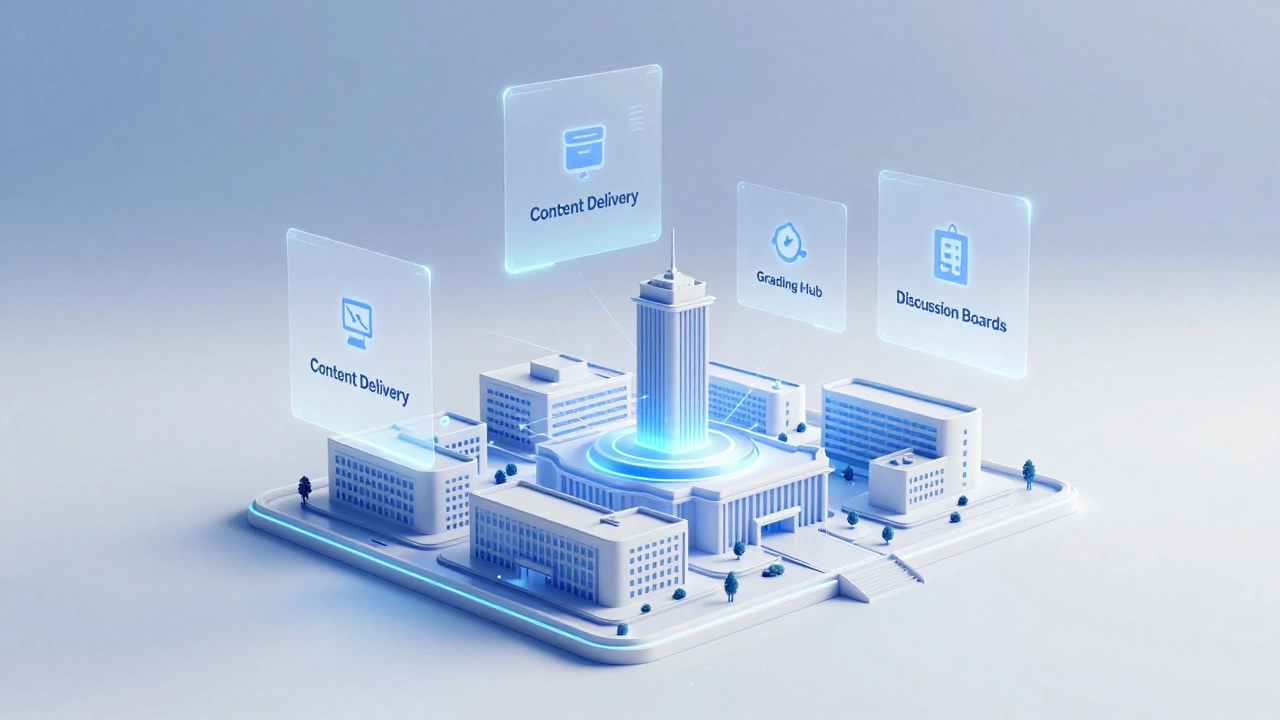
At the heart of every online course is a platform known as a Learning Management System (or LMS). Think of this as the digital campus. Just as a physical university has libraries, lecture halls, and administrative offices, an LMS hosts all these functions virtually.
Popular systems include Moodle, an open-source platform widely used in higher education, Canvas, a cloud-based system favored by many US universities, and Blackboard, one of the earliest and most established LMS providers. These platforms serve several critical jobs:
- Content Delivery: Lectures are uploaded here. They might be pre-recorded video files, PDF readings, or interactive modules.
- Submission Hub: You upload essays, code projects, or exam answers directly to the system. The timestamp ensures you never argue about whether you submitted on time.
- Grading & Feedback: Instructors post marks and written comments. Many LMSs now integrate with AI tools to provide preliminary feedback on grammar or structure before a human teacher reviews the work.
- Communication: Discussion boards allow for asynchronous debate. Unlike a live chat, you can read a thread over a weekend and reply when you have a thoughtful response.
Without an LMS, distance learning would be chaotic email chains. The system provides the structure that mimics the semester calendar of traditional education.
Synchronous vs. Asynchronous Learning
One of the biggest misconceptions about remote study is that it means total freedom to do whatever you want, whenever you want. In reality, courses fall into two main categories, and knowing which one you are taking changes your daily routine significantly.
| Feature | Synchronous | Asynchronous |
|---|---|---|
| Timing | Real-time (live classes) | Self-paced (pre-recorded) |
| Interaction | Immediate (video calls, live chats) | Delayed (forums, emails) |
| Schedule Flexibility | Low (must attend at set times) | High (study at night or early morning) |
| Best For | Students who need structure and social connection | Working professionals or parents with irregular hours |
Synchronous learning involves live sessions via tools like Zoom or a video conferencing tool enabling real-time communication or Microsoft Teams, a collaboration platform integrating chat, video, and file sharing. You join a "virtual classroom" at 10 AM sharp. The professor lectures, you ask questions via microphone or chat box, and breakout rooms simulate group work. This feels closest to traditional schooling but requires you to be available at specific times.
Asynchronous learning offers more flexibility. The instructor records a lecture once. You watch it Tuesday night. You complete the quiz Wednesday afternoon. You post your discussion comment Thursday morning. There is no pressure to be online at the same moment as your peers. However, this model demands intense self-discipline. Without a live bell ringing to start class, it is easy to procrastinate until the deadline looms.
Assessment and Academic Integrity
If you can take an exam from home, how do universities ensure you are doing the work yourself? This is perhaps the most evolved aspect of distance learning in recent years. Cheating was a major concern in the early days of online education, leading to the development of robust proctoring technologies.
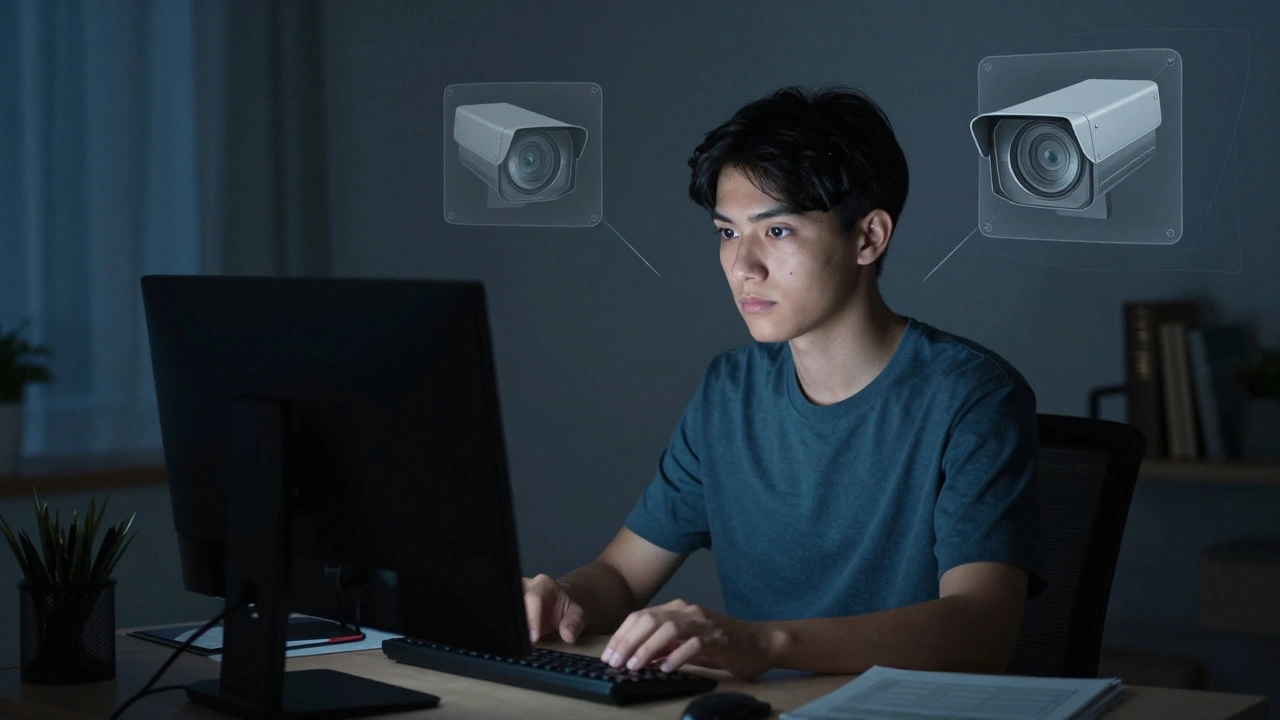
Modern exams often use Remote Proctoring Software, applications that monitor student behavior during online exams using webcam and screen recording. Tools like ProctorU or a service providing live human proctors for online tests or Respondus, software that locks down the browser and monitors the testing environment may require you to:
- Show your ID to the webcam.
- Scan your room to prove there are no hidden notes or second screens.
- Keep your face visible throughout the entire test.
- Avoid looking away from the screen, as eye-tracking algorithms flag suspicious glances.
Beyond tech surveillance, assessment methods have shifted. Instead of memory-based multiple-choice tests, many institutions now favor project-based assessments. You might build a portfolio, record a presentation, or write a research paper. These tasks demonstrate application of knowledge rather than rote memorization, making them harder to cheat on and more valuable for your future career.
The Human Element: Support and Community
A common fear is isolation. Will I make friends? Who helps me if I'm stuck? Distance learning addresses this through deliberate community-building strategies.
Virtual Office Hours: Professors still hold office hours, but they happen on video calls. You can drop into a virtual room to ask questions, just like walking into a faculty member's physical office.
Peer Networks: Most programs create Slack channels, Discord servers, or WhatsApp groups for cohorts. These become lifelines for sharing resources, venting about deadlines, and forming study groups. In my experience helping people navigate online degrees, those who actively participate in these informal chats report higher satisfaction and lower dropout rates.
Technical Support: Unlike a brick-and-mortar school where IT support is a department you visit, online schools offer 24/7 chat support. Since your "campus" is the internet, any technical glitch prevents you from attending. Therefore, responsive tech support is a non-negotiable feature of reputable distance learning providers.
Costs and Hidden Expenses
Distance learning is often marketed as cheaper than on-campus degrees, and frequently it is. You save on commuting, housing, and campus meal plans. However, there are costs to consider:
- Tuition: Some universities charge the same rate for online and on-campus students. Others offer significant discounts for remote learners. Always check the tuition structure.
- Technology: You need a reliable computer and high-speed broadband. In Ireland, for example, rural broadband speeds can vary, so checking local connectivity is essential before enrolling.
- Digital Materials: Textbooks are rarely free. You will likely purchase e-books or access codes for online homework platforms like Pearson MyLab or McGraw-Hill Connect.
Is Distance Learning Right for You?
Success in remote study depends less on intelligence and more on habits. If you struggle with time management, the lack of physical supervision can be detrimental. Conversely, if you are motivated, organized, and comfortable with technology, distance learning offers unparalleled access to global education without uprooting your life.
Before committing, audit your current schedule. Can you dedicate consistent blocks of time each week? Do you have a quiet space to focus? If the answer is yes, the digital door is open.
Do employers value distance learning degrees?
Yes, provided the institution is accredited. In 2026, most employers care more about the reputation of the university and the skills demonstrated than the mode of delivery. Degrees from accredited online programs are legally and professionally equivalent to on-campus degrees.
What internet speed is required for distance learning?
For basic reading and writing assignments, a standard broadband connection (5-10 Mbps) is sufficient. However, for synchronous video lectures and live interactions, a stable connection of at least 25 Mbps download and 3 Mbps upload is recommended to avoid buffering and audio lag.
Can I get financial aid for online courses?
In many regions, including the US and parts of Europe, federal or state financial aid applies to accredited online programs. Scholarships specifically for online learners also exist. Always verify that the program is eligible for the specific grants or loans you plan to apply for.
How do internships work in distance learning programs?
Many online programs partner with local organizations to place students in nearby internships, allowing you to gain practical experience in your own city. Alternatively, some fields offer fully virtual internships, particularly in tech, marketing, and customer service roles.
Is distance learning harder than traditional classes?
Academically, the rigor is usually identical. The challenge lies in the soft skills required: self-motivation, time management, and digital literacy. Without the external structure of a physical classroom, you must create your own discipline, which some find more difficult than the coursework itself.