
Pre-Exam Brain Power Optimizer
You have a big exam coming up. Maybe it is tomorrow, maybe in three days. You feel that familiar knot in your stomach. You know the material, or at least you think you do, but your mind feels foggy. You are tired, stressed, and worried that your brain will simply shut down when you sit down with that pen.
This is not just in your head. It is biology. Stress floods your system with cortisol, which literally blocks the parts of your brain responsible for memory retrieval. But here is the good news: you can hack this process. You do not need to pull an all-nighter or drink five energy drinks. In fact, doing those things will likely hurt your score. Instead, you need to optimize your brain’s physical state so it can perform at its peak.
Improving your brain function before an exam is less about cramming new facts and more about clearing the noise. It is about sleep, nutrition, movement, and mental regulation. Let’s look at exactly how to prepare your mind for the challenge ahead.
The Non-Negotiable Foundation: Sleep
If you ignore everything else on this list, do not ignore sleep. This is where most students make their biggest mistake. They trade sleep for study time, thinking they are gaining an hour of knowledge. In reality, they are losing hours of recall ability.
Sleep is not just rest; it is active processing. While you sleep, your brain moves information from short-term storage (the hippocampus) to long-term storage (the cortex). This process, called memory consolidation, is the neural process of stabilizing a memory trace after initial acquisition. Without this, what you studied yesterday stays fragile and easily lost.
Here is what you should do:
- Aim for 7-9 hours. If your exam is at 9 AM, be asleep by 10 PM. No exceptions.
- Keep the room cool. A temperature around 18°C (65°F) helps your body enter deep sleep stages faster.
- No screens one hour before bed. Blue light suppresses melatonin, the hormone that signals your body it is time to sleep. Read a book or listen to calm music instead.
If you are too anxious to sleep, try the "4-7-8" breathing technique. Inhale for 4 seconds, hold for 7, exhale for 8. Repeat four times. This activates your parasympathetic nervous system, telling your body it is safe to relax.
Fuel Your Brain: What to Eat and Drink
Your brain is only 2% of your body weight, but it uses 20% of your energy. It runs on glucose, but not the spiky kind you get from candy. It needs steady, slow-release fuel.
Avoid heavy carb loads like pasta binges or sugary cereals right before studying or the exam. These cause a sugar spike followed by a crash, leaving you sluggish and unfocused. Instead, focus on foods that support blood flow and neurotransmitter production.
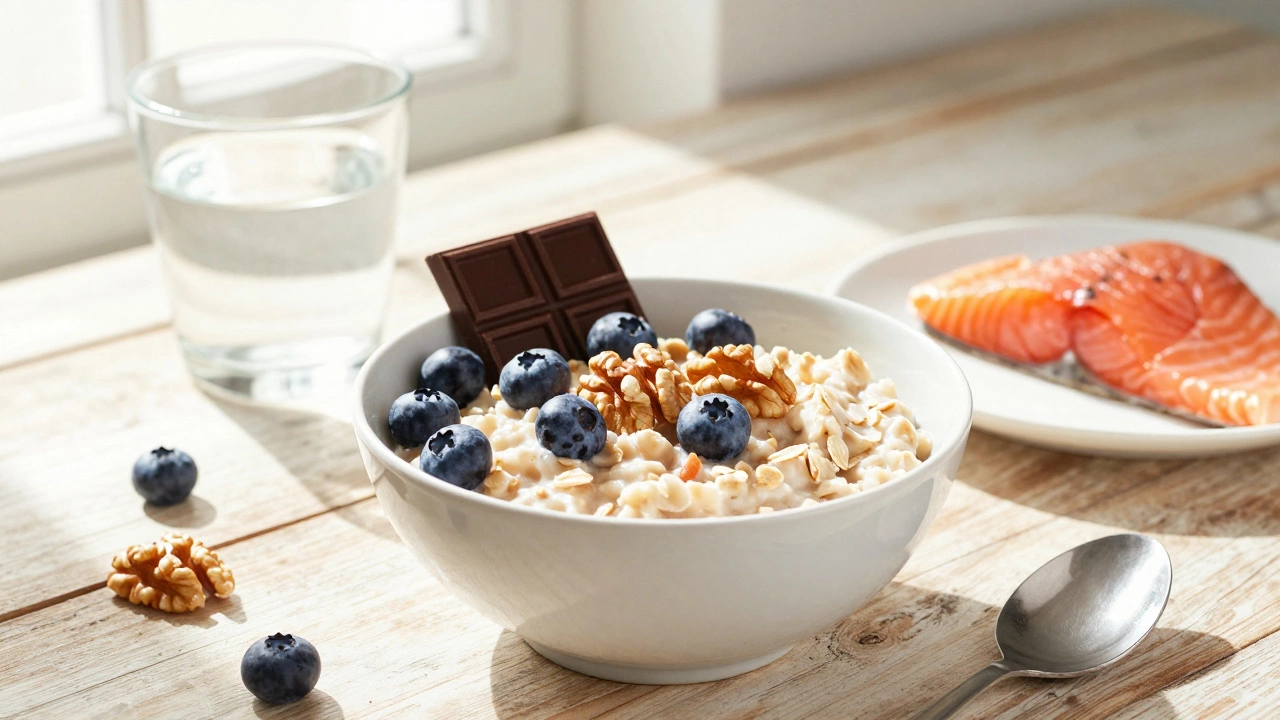
| Food Group | Specific Examples | Why It Helps |
|---|---|---|
| Fatty Fish | Salmon, Mackerel, Sardines | Rich in Omega-3 fatty acids, which build brain cell membranes and reduce inflammation. |
| Berries | Blueberries, Strawberries | Contain antioxidants that may delay brain aging and improve memory. |
| Nuts & Seeds | Walnuts, Pumpkin Seeds | High in Vitamin E and magnesium, protecting brain cells from oxidative stress. |
| Complex Carbs | Oatmeal, Whole Grain Bread | Provides steady glucose release for sustained energy without the crash. |
| Dark Chocolate | 70% Cocoa or higher | Contains flavonoids that increase blood flow to the brain and boost mood. |
Hydration is equally critical. Even mild dehydration (losing just 2% of body water) can impair concentration, short-term memory, and psychomotor skills. Keep a water bottle with you while you study. Aim for pale yellow urine-that is your sign you are hydrated enough.
Be careful with caffeine. Coffee can help, but timing matters. Caffeine has a half-life of about 5-6 hours. If you drink coffee at 4 PM, half of it is still in your system at 10 PM, disrupting your sleep. Stick to morning or early afternoon consumption, and stop caffeine intake at least six hours before bedtime.
Move Your Body to Clear the Fog
It might feel counterintuitive to exercise when you are trying to study. You want to sit still and absorb information, right? Wrong. Physical activity is one of the most effective ways to sharpen your mind.
When you move, your heart rate increases, pumping more oxygen to the brain. Exercise also stimulates the release of Brain-Derived Neurotrophic Factor (BDNF), which is a protein that supports the survival of existing neurons and encourages the growth of new synapses. Think of BDNF as fertilizer for your brain. It makes learning easier and memories stickier.
You do not need to run a marathon. A brisk 20-minute walk outside can reset your focus. The combination of movement and natural light helps regulate your circadian rhythm, keeping you alert during the day and sleepy at night. If you are feeling stuck on a difficult concept, step away from the desk. Do some jumping jacks, stretch, or take a quick walk. You will often find the answer comes to you once you are moving.
Mental Techniques to Reduce Anxiety
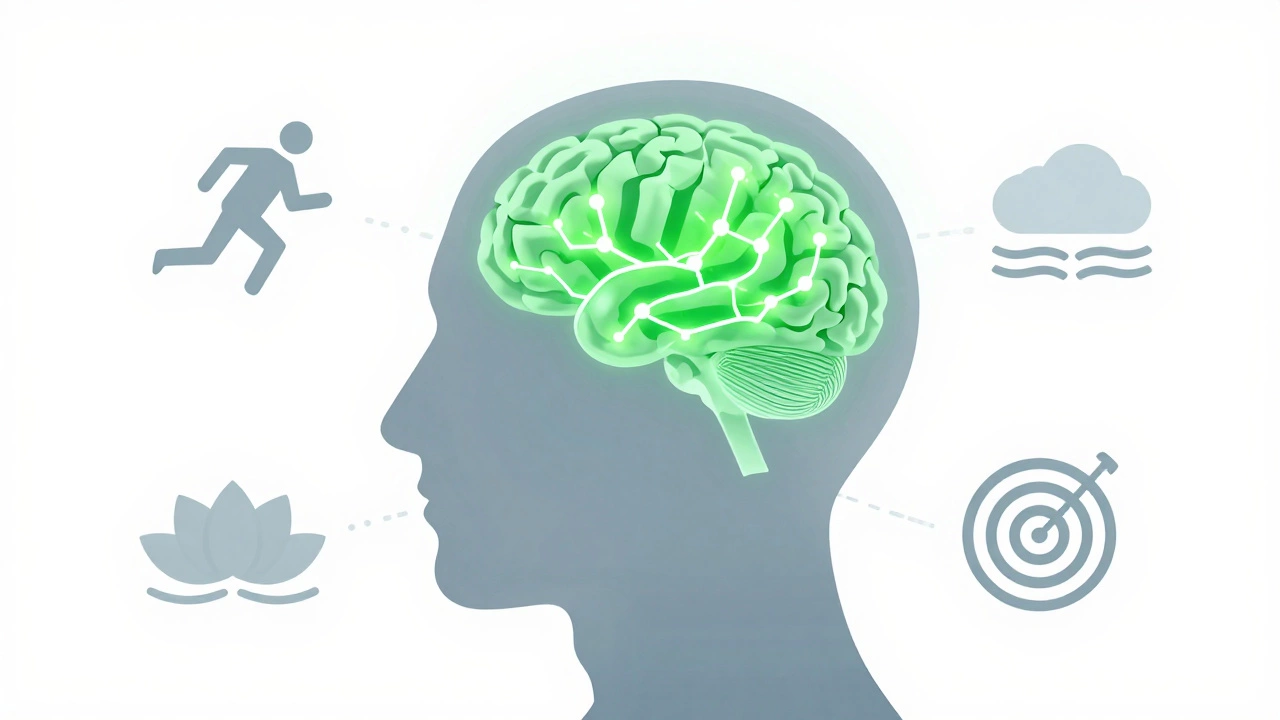
Anxiety is the enemy of performance. When you are panicked, your prefrontal cortex-the part of the brain responsible for logical thinking and decision-making-goes offline. You revert to instinctual responses, which is not helpful for solving math problems or writing essays.
To keep your prefrontal cortex online, you need to manage your stress levels. Here are two powerful techniques:
1. Box Breathing
Used by Navy SEALs to stay calm under pressure, this technique regulates your autonomic nervous system. Inhale for 4 seconds, hold for 4, exhale for 4, hold for 4. Repeat for a few minutes. This lowers your heart rate and reduces cortisol levels.
2. Cognitive Reframing
Instead of telling yourself "I am so nervous," tell yourself "I am excited." Physiologically, anxiety and excitement are very similar-both involve increased heart rate and arousal. By labeling the feeling as excitement, you shift your mindset from threat to challenge. Research shows that reframing anxiety as excitement improves performance compared to trying to calm down completely.
Strategic Study Methods: Work Smarter, Not Harder
How you study matters as much as how much you sleep. Passive reading is ineffective because it does not engage your brain deeply. You need active engagement.
Use Active Recall, which is the practice of stimulating your memory during the learning process rather than passively reviewing material. Close your book and try to write down everything you remember about a topic. Then check what you missed. This struggle strengthens neural pathways.
Combine this with Spaced Repetition, which is a learning technique that involves reviewing information at increasing intervals over time. Instead of studying one subject for five hours straight, study it for 25 minutes, take a break, then return to it later. This prevents fatigue and improves long-term retention.
Create a mock exam environment. Practice answering questions under timed conditions. This reduces the novelty and stress of the actual exam day. Familiarity breeds confidence.
The Day Of: Final Preparations
On the day of the exam, routine is your friend. Stick to your normal schedule as much as possible. Eat a balanced breakfast with protein and complex carbs. Avoid trying new foods that might upset your stomach.
Arrive early. Rushing adds unnecessary stress. Bring everything you need: pens, pencils, calculator, ID, water bottle. Check the rules regarding allowed items beforehand.
Before you start, take a moment to center yourself. Use your box breathing technique. Remind yourself that you have prepared. Trust your training. Focus on one question at a time. Do not let a difficult question derail your entire exam. Skip it, come back to it later.
Your brain is a powerful tool. Treat it with respect. Give it the sleep, food, and movement it needs, and it will reward you with clarity and confidence. You have got this.
Should I pull an all-nighter before my exam?
No, you should never pull an all-nighter. Sleep deprivation severely impairs cognitive function, memory recall, and problem-solving abilities. One night of poor sleep can negate weeks of study. Prioritize getting at least 6-7 hours of sleep over cramming new material.
What is the best breakfast to eat before an exam?
Aim for a balanced meal with protein, healthy fats, and complex carbohydrates. Examples include oatmeal with nuts and berries, eggs on whole-grain toast, or Greek yogurt with fruit. Avoid sugary cereals or pastries that cause energy crashes. Stay hydrated with water.
Can exercise really help me study better?
Yes, exercise boosts blood flow to the brain and releases BDNF, a protein that enhances learning and memory. Even a short 20-minute walk can improve focus and reduce stress. Regular physical activity is linked to better academic performance.
How can I stop feeling anxious before an exam?
Try techniques like box breathing (inhale 4s, hold 4s, exhale 4s, hold 4s) to calm your nervous system. Reframe anxiety as excitement. Prepare thoroughly using active recall and spaced repetition to build confidence. Arrive early to avoid last-minute stress.
Is caffeine good or bad for exam preparation?
Caffeine can improve alertness and focus, but it must be used strategically. Avoid consuming it within 6 hours of bedtime to prevent sleep disruption. Moderate consumption is fine, but excessive amounts can lead to jitteriness and anxiety. Hydrate well alongside caffeine intake.