GCSE 8-Week Revision Planner
Input your exam date to generate a personalized 8-week revision roadmap based on the "Triage, Deep Dive, Mock, Review" strategy.
Start Here
💡 Pro Tip from the Article:
Active Recall is non-negotiable. Don't just re-read notes. Use flashcards or past papers to test yourself. If you score below 30% on a mock now, prioritize understanding core concepts in Weeks 1-2.
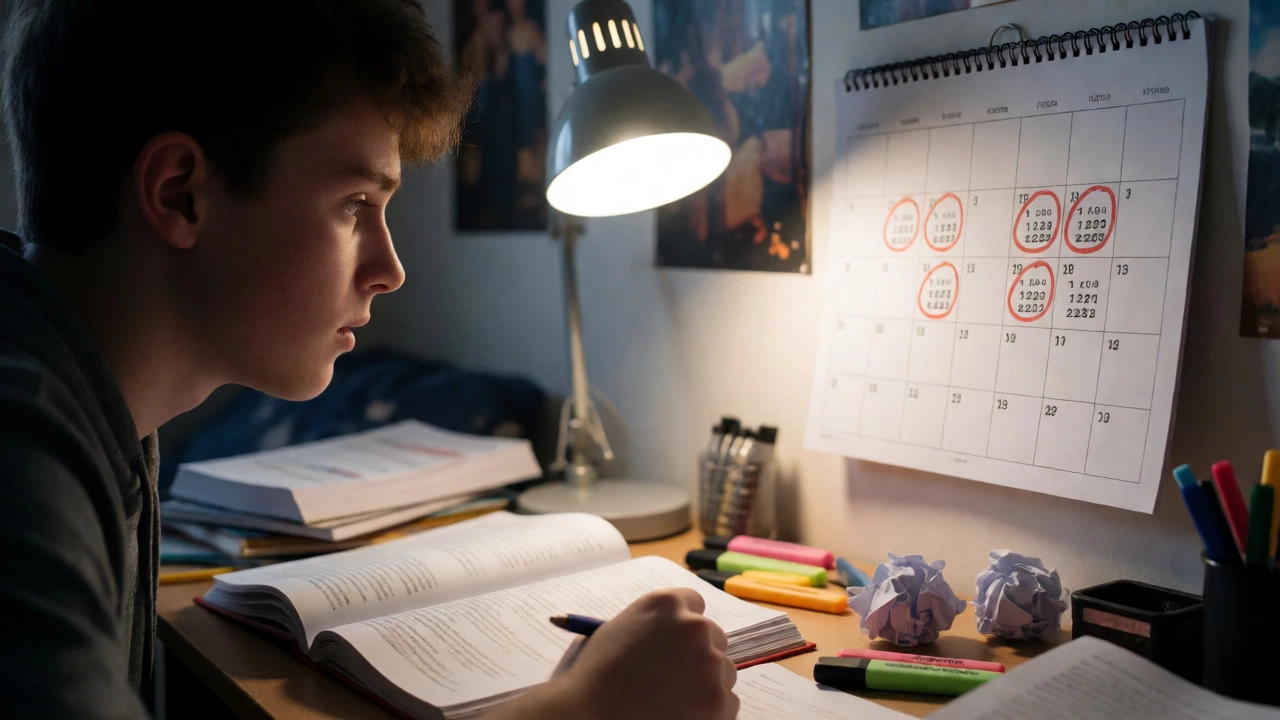
You are sitting at your desk, staring at a calendar. The date is two months before exams start. Panic sets in. You have half the syllabus left to cover, or maybe you feel like you haven't started properly at all. The question keeps looping in your head: Is 2 months enough for GCSE?
The short answer is yes, but with a massive asterisk. It depends entirely on your starting point and how you spend those next sixty days. If you have been coasting through lessons and ignoring homework, two months is a sprint. If you have kept up with classwork but just need to consolidate knowledge, it is plenty of time. Let’s break down exactly what happens when you compress your revision into eight weeks, where students usually fail, and how to actually pull off good grades without burning out.
Assess Your Starting Point Honestly
Before you buy a single textbook or download an app, you need to know where you stand. Most students overestimate their memory. They read a page, nod along, and think they know it. That is not learning; that is recognition. To figure out if two months works for you, take a past paper under timed conditions. Do not look at the mark scheme until you are done.
If you score below 30%, you are playing catch-up. Two months will be intense. You cannot afford to re-read notes. You need active recall strategies immediately. If you score between 40% and 60%, you have a solid foundation. Two months is ideal for refining technique and filling specific gaps. Above 70%? You are in great shape. Use this time to polish high-tier questions and manage stress.
Active Recall is a study technique where you retrieve information from memory without looking at your notes. Unlike passive reading, which feels easy but fades quickly, active recall forces your brain to build stronger neural pathways. In a two-month window, this is non-negotiable. Every hour spent passively highlighting is an hour wasted.
The 8-Week Strategy Breakdown
You cannot treat week one the same as week seven. You need phases. Here is a realistic structure that balances coverage with practice.
- Weeks 1-2: Triage and Foundation. Identify your weakest topics across all subjects. Do not try to learn everything. Pick the three lowest-scoring areas per subject. Spend these two weeks understanding the core concepts. Use resources like BBC Bitesize or Save My Exams to get quick explanations. Focus on understanding, not memorizing yet.
- Weeks 3-5: Deep Dive and Application. Now you apply what you learned. Work through topic-specific questions. If you studied Biology cells, do twenty cell-related questions. This is where you fix misconceptions. If you get something wrong, go back to the source material. Do not move on until you can explain it simply.
- Weeks 6-7: Full Mock Conditions. Stop doing topic-based questions. Start doing full past papers. Time yourself strictly. Simulate exam day pressure. No music, no phone, no snacks unless allowed. After each paper, spend twice as long marking it as you did writing it. Analyze why you lost marks. Was it knowledge? Technique? Misreading the question?
- Week 8: Light Review and Logistics. Do not cram new information. Review your error log-the list of mistakes you made in Weeks 6-7. Check your timetable, pack your bag, and sleep well. Your brain needs rest to consolidate memory.
Subject-Specific Realities
Not all subjects react the same way to a two-month crunch. Maths is cumulative. You cannot fake your way through calculus if you don’t understand algebra. For Maths, consistency beats intensity. Doing ten questions every day is better than doing seventy on Sunday. English Literature is different. You need quotes and structural analysis. You can memorize key quotes in two months, but developing critical thinking takes longer. Be honest about whether you can improve your essay structure in eight weeks.
| Subject Type | Difficulty Level | Best Strategy | Potential Grade Jump |
|---|---|---|---|
| Maths & Sciences | High (Cumulative) | Daily problem solving, focus on weak foundations | 1-2 Grades |
| English Language | Medium (Technique) | Master PEE/PEEL paragraphs, analyze model answers | 1 Grade |
| Humanities (History/Geog) | Medium-High (Content) | Mind maps for chronology, learn case studies | 1-2 Grades |
| Languages | Very High (Skill) | Listening practice, verb tenses, vocab lists | 0-1 Grade |
Notice the language column. If you are behind in French or Spanish, two months is tough. Language acquisition relies on exposure and habit. You can boost your grade by mastering common verbs and listening exercises, but don’t expect to become fluent. Prioritize the highest-yield grammar points.
The Pitfalls That Kill Grades
Students who fail to maximize their two months usually make one of three mistakes. First, they revise what they already know because it feels good. Solving easy problems gives a dopamine hit. Struggling with hard problems feels bad, so we avoid them. But growth only happens in the struggle zone. Force yourself to tackle the topics that scare you.
Second, they ignore the mark scheme. GCSE exams are not just about knowing facts; they are about hitting keywords. The mark scheme tells you exactly what words earn marks. Read it. Memorize the phrasing. If the mark scheme says "inhibits enzyme activity," do not write "stops the enzyme." Precision matters.
Third, they neglect health. Pulling all-nighters reduces cognitive function by up to 40%. If you sleep four hours, you retain less than half of what you studied. Sleep is when your brain moves information from short-term to long-term memory. During these two months, prioritize seven to eight hours of sleep over extra revision hours. Exercise also helps. Even a twenty-minute walk boosts blood flow to the brain and reduces anxiety.
Tools That Actually Help
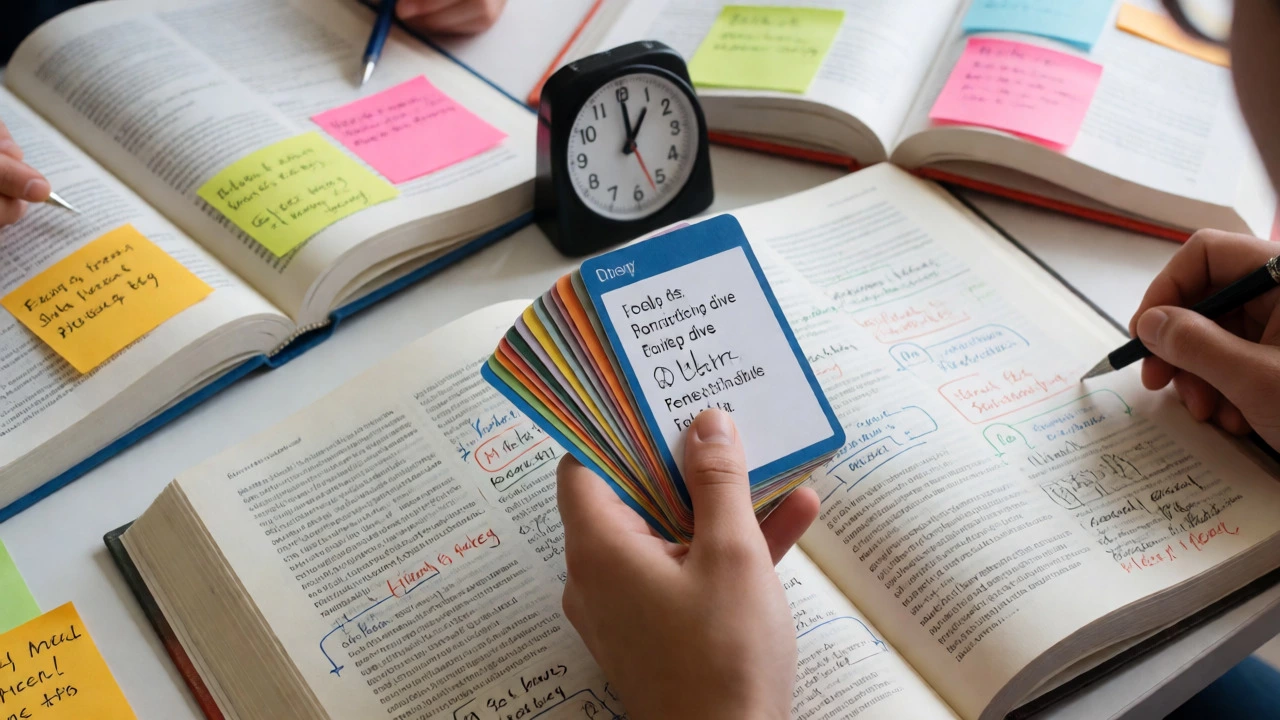
You do not need fancy apps. You need efficient tools. Flashcards are great for factual recall, especially for biology definitions or historical dates. Anki is a popular spaced-repetition software that shows you cards right before you forget them. This saves time because you aren’t reviewing things you already know perfectly.
Past papers are your best friend. Available from AQA, Edexcel, and OCR websites, they show you the exact style of questions asked. Do not just do them; dissect them. Look for patterns. Does the exam board always ask about a specific type of graph in Geography? Then master that graph type.
Consider a tutor for specific bottlenecks. If you understand 90% of Chemistry but hate Organic Chemistry, hire a tutor for five sessions focused solely on that. General tutoring is expensive and slow. Targeted intervention is fast and effective.
Mental Health and Exam Anxiety
Two months is a short runway. Pressure builds. It is normal to feel anxious. But panic paralyzes action. When you feel overwhelmed, zoom out. Ask yourself: "What is the one thing I can do today to improve my grade?" Not "How do I learn the whole syllabus?" Just one small step.
Talk to someone. Teachers, parents, friends. Often, saying your worries out loud makes them manageable. Remember that GCSEs are important, but they are not the end of the world. Many people recover from lower grades later in life. However, since you want the best outcome, use this pressure as fuel. Channel the nervous energy into focused work blocks.
Use the Pomodoro technique. Study for 25 minutes, break for 5. After four cycles, take a longer break. This prevents burnout and keeps your mind fresh. It is easier to commit to 25 minutes than "three hours," which often leads to procrastination.
Final Verdict: Can You Do It?
Yes, you can achieve significant improvements in two months. But it requires discipline. You must cut out distractions. Social media, video games, and endless scrolling are enemies of deep work. Delete apps if you have to. Tell your friends you are busy. Protect your time.
Start today. Not tomorrow. Open a past paper. Find one question you cannot answer. Learn how to answer it. That is progress. Repeat this daily. By the time exam day arrives, you won’t just hope for a good grade; you will have earned it.
Can I go from a grade 3 to a grade 7 in 2 months?
It is challenging but possible, especially in subjects like Maths or Science where understanding key concepts unlocks many marks. It requires intensive daily study, likely 3-4 hours outside school, and focusing heavily on high-weightage topics. Consistency is more important than occasional marathon sessions.
Should I attend all my school lessons during this period?
Generally, yes. School lessons provide structured support and access to teachers who know the exam board specifics. However, if a lesson is purely repetitive and you have mastered the content, speak to your teacher. Sometimes negotiating independent study time for weaker subjects is more beneficial than sitting through a lesson you don't need.
Is it better to revise one subject a day or mix them?
Mixing subjects is usually better for retention. Interleaving-switching between topics-forces your brain to reload context, strengthening memory. Studying one subject all day can lead to fatigue and diminishing returns. Try rotating subjects every few hours or dedicating mornings to one difficult subject and afternoons to another.
What if I fall behind schedule?
Don't scrap the plan. Adjust it. If you miss a week, drop the least important topics to keep moving forward. Perfectionism is the enemy of progress. It is better to cover 80% of the syllabus well than 100% poorly. Re-evaluate your priorities weekly and cut low-yield content if necessary.
Do I need to hire a tutor?
Only if you have specific, persistent gaps that self-study hasn't fixed. A tutor is valuable for explaining complex concepts or providing feedback on essay technique. For general revision, past papers and online resources like PhysicsAndMathsTutor or Seneca Learning are often sufficient and cost-effective.