
Online vs Traditional Learning Suitability Calculator
Find Your Best Learning Fit
Answer these questions honestly to get a personalized recommendation based on current research about online learning effectiveness.
It is 2026, and the debate about whether online learning is better or worse than traditional classroom instruction has shifted. We are no longer asking if it works; we are asking how well it works for specific goals. For some students, digital platforms offer unprecedented flexibility and access to global expertise. For others, the lack of face-to-face interaction leads to isolation and lower retention rates. The truth is not black and white. It depends entirely on your learning style, discipline, and career objectives.
To determine if online education is right for you, we need to look beyond marketing claims and examine the actual mechanics of distance learning. Let's break down the real advantages, the hidden pitfalls, and the data behind student success in virtual environments.
The Flexibility Factor: Why Online Wins on Convenience
The most obvious benefit of distance learning is flexibility. In a traditional brick-and-mortar university, your schedule is dictated by the institution. Classes happen at set times, on set days, often requiring commuting. Online programs allow you to structure your day around your life, not the other way around.
This is particularly valuable for working professionals. According to recent data from the U.S. Department of Education, over 40% of adult learners enroll in online courses specifically to balance work and study. If you are raising children, managing a full-time job, or living in a rural area with limited educational options, online learning removes geographical barriers. You can attend a lecture from a top-tier institution while sitting in your hometown.
However, flexibility requires self-discipline. Without the physical presence of a teacher and peers, procrastination becomes the enemy. Students who struggle with time management often find that "flexible" schedules turn into "never-ending" deadlines. Success in this format demands a high level of intrinsic motivation.
Cost Efficiency and Hidden Expenses
Financial considerations play a huge role in the decision-making process. Generally, online degrees are cheaper than on-campus equivalents. Why? Because institutions save money on facility maintenance, utilities, and campus services. These savings are sometimes passed on to students through lower tuition fees.
But be careful. While tuition might be lower, there are hidden costs. You need a reliable computer, high-speed internet, and possibly specialized software. Some programs charge additional fees for digital materials or proctored exams. Additionally, financial aid packages can vary between online and on-campus programs, so always verify eligibility before enrolling.
For international students, online learning eliminates visa costs, relocation expenses, and foreign exchange fluctuations. This makes higher education accessible to a broader global audience. However, currency conversion fees and payment processing charges can still add up.
Learning Outcomes: Does Knowledge Stick?
A common concern is whether knowledge acquired online is as robust as that gained in person. Research shows mixed results. A meta-analysis published in the Review of Educational Research found that online learning outcomes are comparable to face-to-face instruction when properly designed. The key factor is interactivity.
If an online course consists only of passive video lectures and multiple-choice quizzes, retention rates drop significantly. Effective e-learning incorporates active learning strategies: discussion forums, peer reviews, live webinars, and project-based assignments. These methods mimic the collaborative nature of physical classrooms.
Conversely, hands-on disciplines like medicine, engineering, or laboratory sciences face challenges online. Virtual simulations have improved dramatically, but they cannot fully replace tactile experience. Students in these fields often require hybrid models where theoretical knowledge is learned online, but practical skills are developed in physical labs.
Social Interaction and Networking
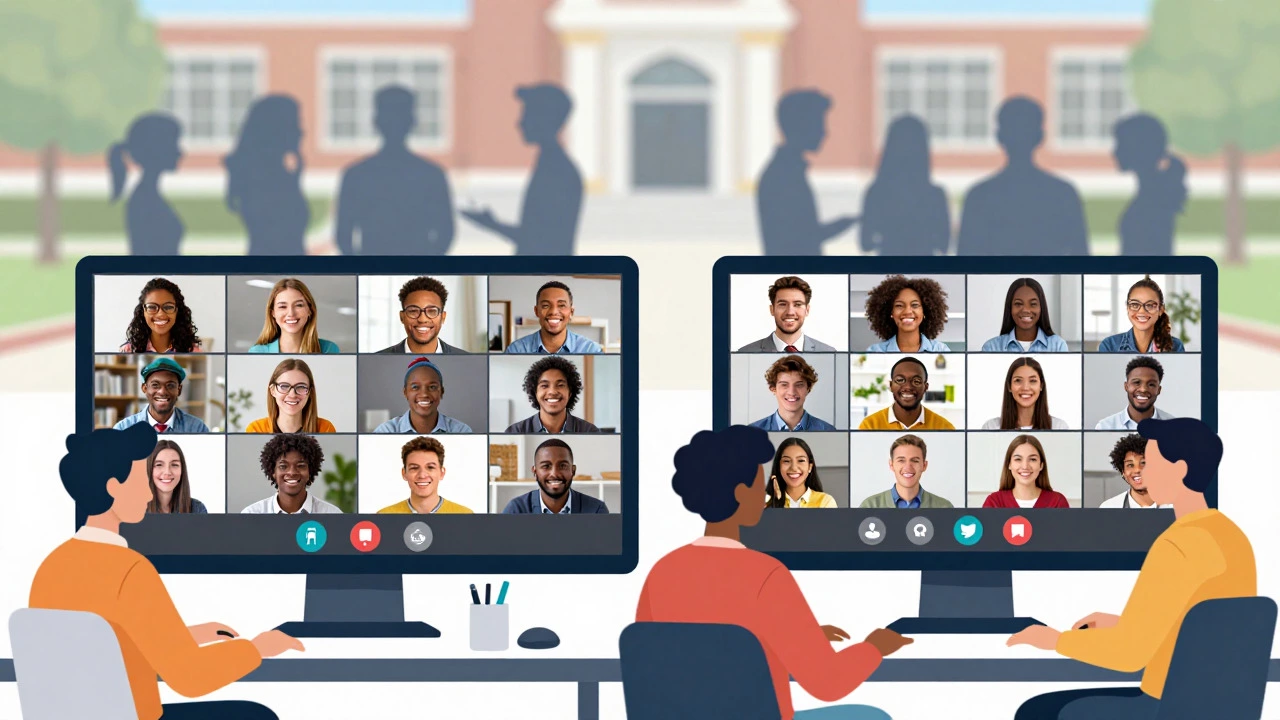
One area where traditional education still holds a strong advantage is social networking. University campuses are hubs for spontaneous interactions-coffee shop conversations, club meetings, and group study sessions. These informal networks often lead to job opportunities, collaborations, and lifelong friendships.
Online communities try to replicate this through discussion boards and virtual meetups. While effective for structured collaboration, they rarely capture the serendipity of face-to-face encounters. Building trust and rapport digitally takes more effort and time. Employers increasingly value soft skills like communication and teamwork, which are harder to demonstrate in a purely virtual environment.
That said, online platforms connect you with a more diverse global network. You might collaborate with peers from different countries and cultural backgrounds, broadening your perspective in ways a local campus cannot. This diversity can be a significant asset in today's interconnected job market.
Technology Dependence and Digital Divide
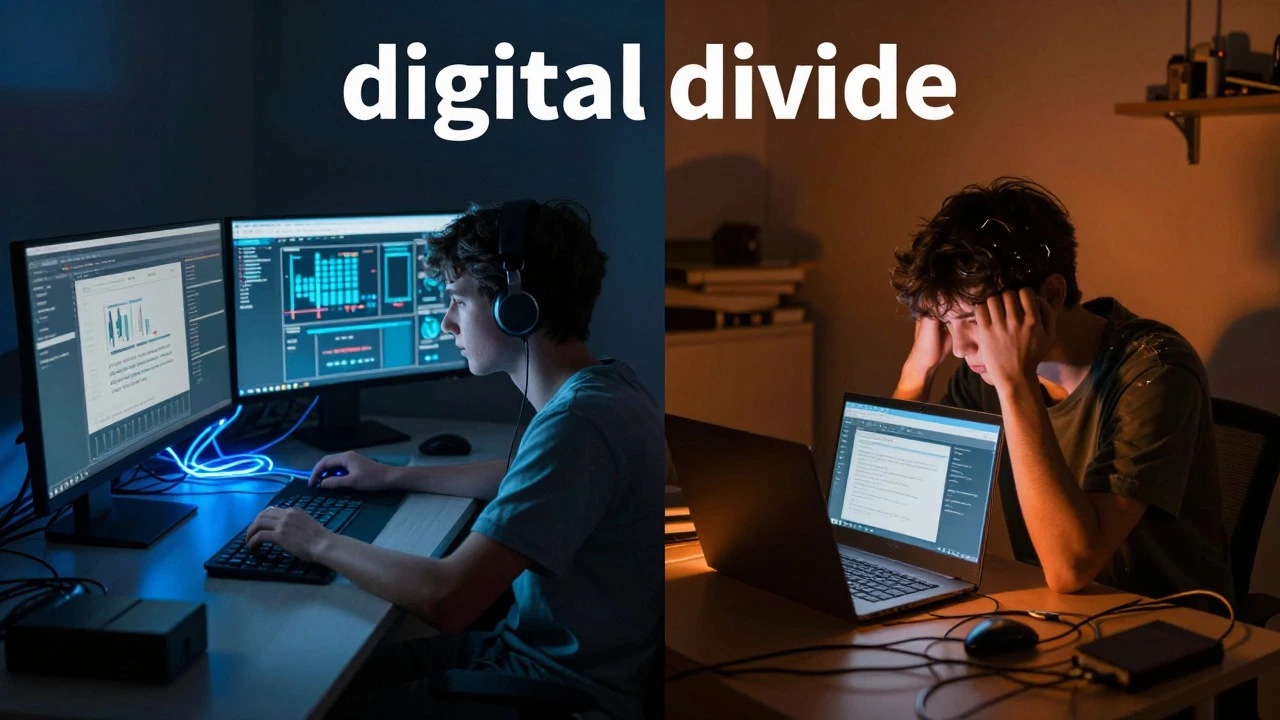
Online learning assumes a baseline of technological access and literacy. Not everyone has equal access to high-speed internet or modern devices. This "digital divide" can exacerbate existing inequalities. Students from lower-income backgrounds may struggle with connectivity issues, outdated hardware, or distracting home environments.
Moreover, technical glitches can disrupt learning. A crashed server during an exam or a poor audio connection during a live lecture can cause significant stress. Institutions must invest in robust IT support to mitigate these risks. As students, you should ensure your home setup is reliable before committing to an online program.
Comparison: Online vs. Traditional Learning
| Feature | Online Learning | Traditional Classroom |
|---|---|---|
| Flexibility | High (self-paced or asynchronous) | Low (fixed schedule) |
| Cost | Generally lower tuition, hidden tech costs | Higher tuition, campus fees, commuting |
| Social Interaction | Digital forums, less spontaneous | Face-to-face, rich networking opportunities |
| Learning Style | Self-directed, reading/video heavy | Instructor-led, interactive discussions |
| Accessibility | Global reach, requires internet | Local/regional, requires physical presence |
Who Should Choose Online Learning?
Online learning is ideal for:
- Working professionals seeking career advancement without quitting their jobs.
- Students in remote areas lacking access to quality institutions.
- Self-motivated individuals who excel at time management.
- Learners interested in global perspectives and diverse peer groups.
- Those needing affordable education options.
Traditional classrooms are better suited for:
- Students who thrive on social interaction and immediate feedback.
- Fields requiring hands-on practice (medicine, arts, trades).
- Individuals who struggle with self-discipline and structure.
- Younger students benefiting from campus life and mentorship.
Making the Right Choice
Deciding between online and traditional learning is personal. Assess your current situation honestly. Do you have the time, technology, and motivation to succeed online? Or do you need the structure and community of a physical campus? There is no universal "better" option. The best choice aligns with your unique circumstances and goals.
Before enrolling, research accreditation carefully. Ensure the online program is recognized by relevant professional bodies. Check alumni success stories and graduate employment rates. Talk to current students to get unfiltered insights into the experience.
Is an online degree respected by employers?
Yes, provided the institution is accredited. Most employers care more about the skills and knowledge you possess than the delivery method. Top universities now offer fully online degrees that carry the same weight as their on-campus counterparts.
How much does online learning cost compared to traditional colleges?
Online programs typically cost 10-30% less due to reduced overhead. However, always check for hidden fees like technology charges or exam proctoring fees. Financial aid availability may also differ.
Can I learn technical skills effectively online?
Many technical skills, such as coding, data analysis, and digital marketing, are highly suitable for online learning. Fields requiring physical manipulation, like surgery or mechanical repair, often require hybrid models with lab components.
What are the biggest challenges of studying online?
The main challenges are isolation, procrastination, and technical issues. Successful online students create dedicated study spaces, stick to strict schedules, and actively participate in virtual communities to combat loneliness.
Do online classes offer networking opportunities?
Yes, but they require more proactive effort. Use LinkedIn, join alumni groups, and participate in discussion forums. While less spontaneous than campus life, online networks can be globally diverse and valuable.