Remote Learning vs Homeschooling Decision Tool
This tool helps you determine whether remote learning or homeschooling is the better option for your child based on your specific needs and circumstances.
Recommendation
Many parents and students hear the words remote learning and homeschooling used interchangeably-and it’s easy to see why. Both happen at home. Both involve screens and schedules. Both became household terms during the pandemic. But they’re not the same thing. Confusing them can lead to wrong expectations, legal issues, or even missed support. Here’s what actually separates them-and why it matters.
Who’s in charge?
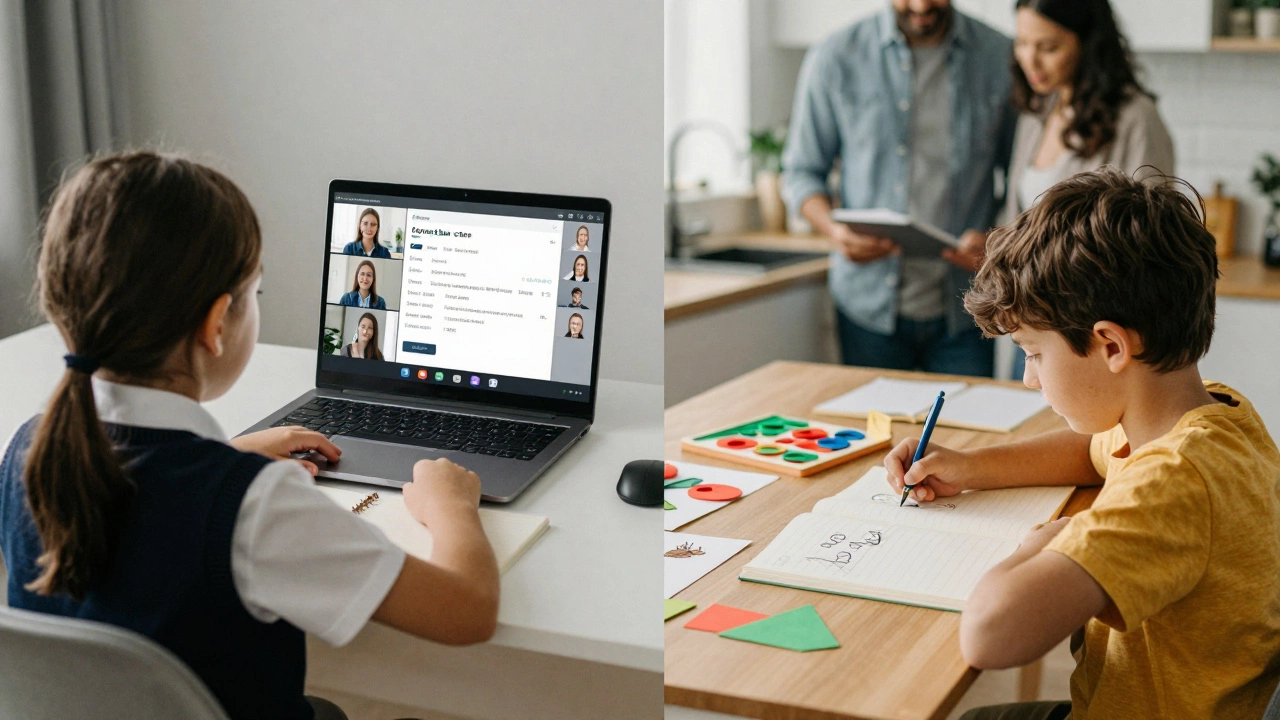
In remote learning, the school still runs the show. Teachers assign lessons, set deadlines, grade work, and track attendance. The curriculum follows state or national standards. If you’re enrolled in a public or private school that switched to online delivery because of weather, illness, or infrastructure issues, you’re in remote learning. It’s school, just delivered differently.
Homeschooling is different. Parents take full responsibility. They choose the curriculum, decide how much time to spend on math or history, and design the daily rhythm. There’s no school system overseeing them-unless the local education authority requires periodic check-ins. In Ireland, for example, parents must register with the Tusla education service if they’re homeschooling. That’s not required for remote learning.
Curriculum: Standardized or Custom?
Remote learning uses the same materials your child would get in a classroom. If your kid’s school uses Pearson textbooks, Google Classroom, or the Irish Primary Curriculum, that’s what they’ll see online. Teachers follow the same lesson plans. Tests are timed. Progress is measured against class averages.
Homeschooling? You pick. Maybe you use the Charlotte Mason method with nature journals and classic literature. Maybe you follow the Montessori approach with hands-on kits. Some families use Khan Academy for math, Outschool for science, and YouTube for history. There’s no rulebook. You can skip fractions for three months if your child is obsessed with space rockets. That’s the freedom-and the burden.
Who teaches?
In remote learning, certified teachers deliver instruction. They’re trained, assessed, and accountable. They hold virtual office hours. They give feedback. They know how to spot when a student is falling behind.
In homeschooling, the parent-or a hired tutor-is the main educator. You don’t need a teaching degree. But you do need patience, structure, and access to resources. Some parents feel confident teaching algebra. Others hire a tutor for chemistry or hire a virtual assistant for handwriting practice. It’s a patchwork. And it’s legal-just not the same as having a professional educator managing the process.
Social interaction: Is it missing?
One of the biggest worries people have about both is isolation. But the social experience differs.
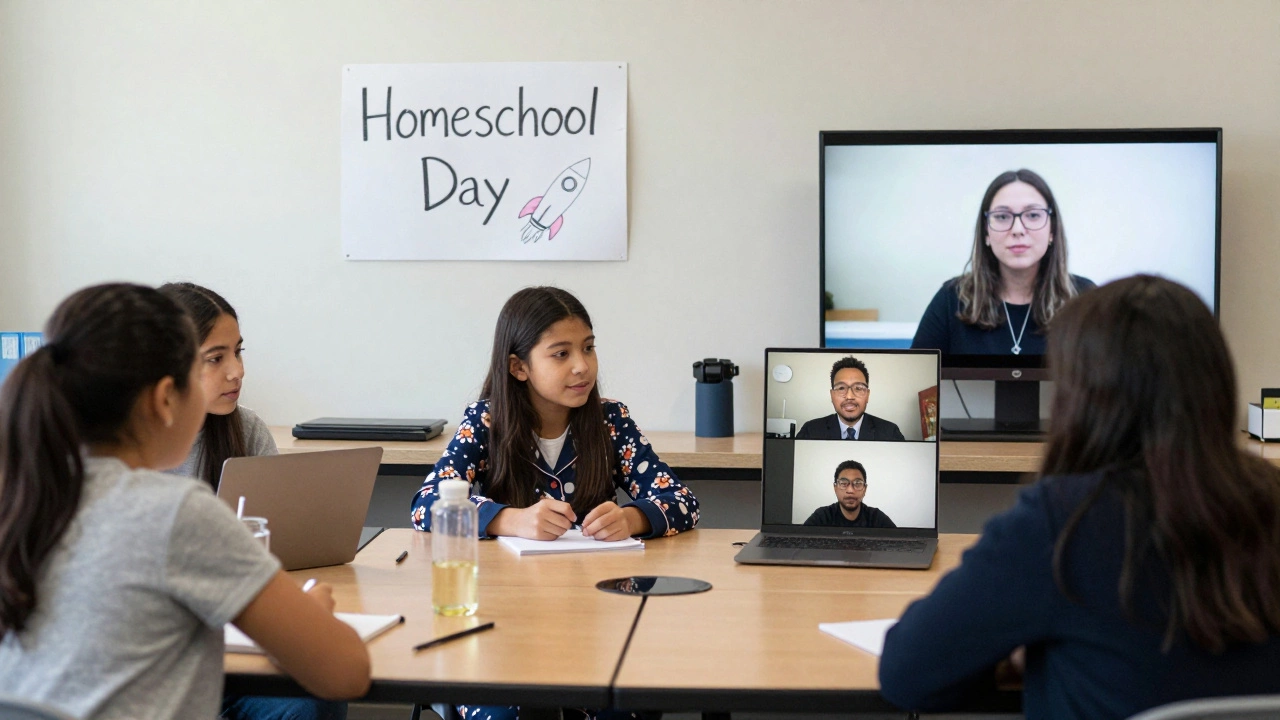
Remote learners still interact with their classmates daily. They join Zoom breakout rooms. They post in discussion boards. They get group assignments. They see their friends’ faces on screen. Many schools organize virtual clubs, art shows, or sports challenges. The connection is digital, but it’s structured and consistent.
Homeschoolers often rely on parents to create social opportunities. That means co-ops, park days, music classes, or volunteering. Some families join local homeschool networks. Others use online communities like Home Education UK or Homeschool World. But there’s no automatic social calendar. It’s up to you to build it.
Regulations and oversight
Remote learning doesn’t require paperwork. You’re enrolled. You log in. You do the work. If you miss a deadline, the school contacts you.
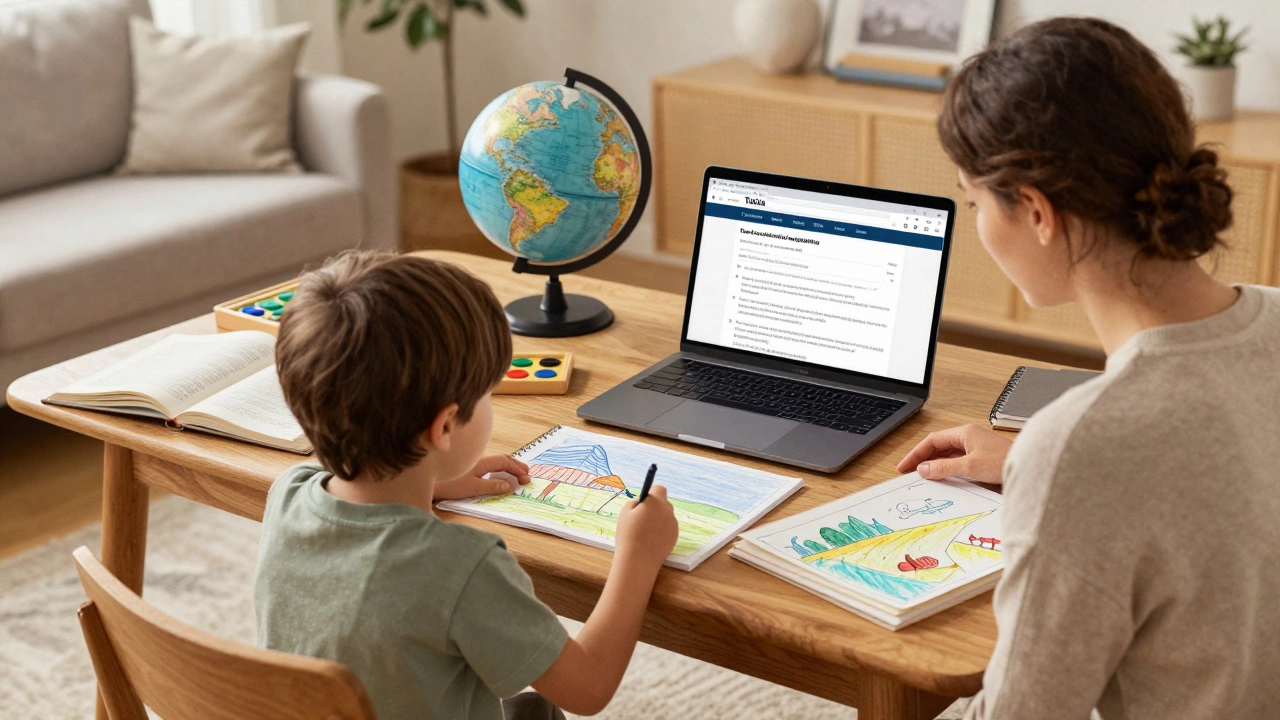
Homeschooling comes with legal obligations. In Ireland, you must notify Tusla in writing that you’re homeschooling. You’re expected to provide a “regular and efficient” education. That doesn’t mean following the national curriculum-but you do need to show progress. Some families submit portfolios. Others get assessed by an educational psychologist. Failure to comply can lead to intervention.
In the U.S., rules vary by state. In the UK, you only need to inform the local authority. In Australia, you register with each state’s education department. Remote learning? No registration needed. You’re still a student of the school.
Flexibility and structure
Remote learning usually sticks to a school day schedule. 9 a.m. to 3 p.m. Breaks. Lunch. Timed assignments. It mimics the classroom. That’s helpful for families who want routine but can’t send kids to school.
Homeschooling thrives on flexibility. You might do math after breakfast, read history in the afternoon, and do science experiments on Saturday. You can take a week off to visit Galway. You can pause geometry to study the Irish language because your child just fell in love with Gaelic songs. The schedule bends to the child’s rhythm-not the bell.
Cost and resources
Remote learning is free. Public schools provide devices, internet access, and learning platforms. Private schools might charge tech fees, but the core education is covered by tuition.
Homeschooling costs vary. Some families spend nothing beyond books and printer ink. Others invest in curricula, tutors, museum memberships, and online subscriptions. A full-year curriculum package from Time4Learning or Abeka can cost €500-€1,200. You’re paying for choice-and control.
When to choose one over the other
Choose remote learning if:
- Your child is enrolled in a school and needs to continue their education during a temporary disruption
- You want certified teachers handling instruction
- You prefer standardized assessments and clear progress tracking
- You don’t have time or confidence to design a full curriculum
Choose homeschooling if:
- You want full control over what, when, and how your child learns
- Your child has special needs not met by the school system
- You’re relocating and want continuity without switching schools
- You’re philosophically opposed to standardized testing or curriculum mandates
Some families switch between them. A child might do remote learning during a flu outbreak, then transition to homeschooling if the school’s online model isn’t working. Others start with homeschooling and re-enroll when they feel ready for structure.
Common mistakes to avoid
One mistake? Assuming remote learning is just “homeschooling with Zoom.” It’s not. You can’t skip assignments, ignore deadlines, or drop subjects without consequences. The school still holds you accountable.
Another? Thinking homeschooling means total freedom. It doesn’t. You still need to document progress. You still need to ensure your child is learning core skills. Ignoring that can lead to legal trouble-or gaps in knowledge that show up later.
And don’t assume one is better than the other. Remote learning keeps kids connected to peers and teachers. Homeschooling lets kids learn at their own pace. Both can work. Both require effort. Neither is a shortcut.
What happens after?
Remote learners return to school when conditions allow. Their transcripts are updated. Their credits count. They sit for exams like the Junior Cycle or Leaving Cert like everyone else.
Homeschooled students can sit the same exams-but they register as private candidates. They need to find exam centers. They might need to study past papers independently. Some go on to college without a traditional school record. Others take the GED or equivalent. The path is different, but it’s valid.
There’s no one-size-fits-all. The right choice depends on your child’s needs, your family’s capacity, and your goals. Remote learning is a temporary fix. Homeschooling is a long-term decision. Know the difference before you start.
Can my child do remote learning and homeschooling at the same time?
No. You can’t be officially enrolled in a school and homeschooling at the same time. If you’re enrolled in a school, you’re doing remote learning. If you’ve withdrawn your child to homeschool, you’re no longer part of the school system. Mixing the two can cause confusion with attendance records, grading, and legal compliance.
Do I need to be a teacher to homeschool?
No. You don’t need a teaching degree to homeschool in Ireland or most countries. But you do need to show that your child is receiving a “regular and efficient” education. That means covering basic subjects like literacy, numeracy, and social studies. Many parents use online resources, tutors, or co-ops to fill gaps in their own knowledge.
Is remote learning harder than traditional school?
It’s not harder-it’s different. Remote learning removes the physical classroom, but not the expectations. Students still need to manage time, stay focused, and meet deadlines. Some thrive without the distractions of a busy classroom. Others struggle without face-to-face support. The challenge isn’t the content-it’s the self-discipline required.
Can homeschooled children take the Leaving Cert?
Yes. Homeschooled students in Ireland can register as private candidates for the Leaving Certificate through the State Examinations Commission. They need to apply by the deadline, pay the fee, and arrange to sit exams at an approved center. Many use past papers, online tutors, or study groups to prepare.
What if my child hates remote learning?
If your child is struggling with remote learning, talk to the school. They may offer additional support, adjusted schedules, or hybrid options. If the model isn’t working and you have the capacity, switching to homeschooling is an option-but it’s a legal step. You’ll need to formally withdraw your child from the school and notify Tusla. Don’t just stop logging in-that can count as truancy.