
Andragogy Training Auditor
Is your next workshop actually engaging adults? Select the pillars your training plan incorporates to see how well it aligns with proven adult learning principles.
The Need to Know Why
Does the session explain the immediate relevance and problem-solving value?
Self-Concept & Autonomy
Are learners given choices in topics, pace, or path? Is their independence respected?
Prior Experience
Does the curriculum leverage participants' past knowledge and peer-to-peer sharing?
Readiness to Learn
Is the timing aligned with a current life event, job role change, or immediate need?
Orientation to Learning
Is the focus on practical application and simulations rather than abstract theory?
Audit Results
Actionable Recommendations:
Imagine trying to teach a grown professional how to use a new software system the same way you taught a six-year-old to tie their shoes. It wouldn’t work. Adults don’t just learn differently; they have different needs, motivations, and life experiences that shape how they absorb information. This is where andragogy, or the art and science of helping adults learn, comes into play.
The concept isn't just academic theory. It’s a practical framework used by trainers, managers, and educators worldwide to design programs that actually stick. At the heart of this framework are five specific pillars identified by Malcolm Knowles. Understanding these pillars changes everything about how we approach training, coaching, and personal development for grown-ups.
Why Adults Learn Differently from Children
To grasp the pillars, we first need to understand the shift in mindset. Traditional education, often called pedagogy, treats learners as dependent personalities. The teacher knows, the student doesn’t. The curriculum is set by an outside authority. But adults? They bring baggage-both good and bad-to the table. They have jobs, families, mortgages, and decades of experience. They aren’t blank slates.
When you ignore this reality, engagement drops. People tune out because they feel patronized or irrelevant. By switching to an andragogical approach, you respect the learner’s autonomy. You acknowledge that they are there by choice (usually) and that their time is valuable. This respect forms the foundation for all five pillars.
Pillar 1: The Need to Know Why
If you ask an adult to learn something new, the first question on their lips is almost always, “Why do I need to know this?” Unlike children, who might follow instructions simply because a teacher said so, adults need relevance. They need to see the immediate application of what they are learning.
This pillar emphasizes that motivation is tied to problem-solving. If a manager wants their team to learn a new reporting tool, they can’t just say, “Learn this by Friday.” They need to explain how this tool will cut down weekly report time by two hours. That’s a tangible benefit. Without that clear connection between the learning and a real-life outcome, the adult learner disengages. It’s not about being difficult; it’s about efficiency. Adults prioritize learning that solves current problems over abstract knowledge that might be useful someday.
Pillar 2: Self-Concept and Autonomy
As we age, our self-concept shifts from being dependent to being self-directed. An adult’s identity is deeply tied to their ability to make their own decisions. When someone tries to dictate exactly how an adult should learn, it triggers resistance. It feels like a loss of control.
In practice, this means giving learners choices. Maybe they can choose which case study to analyze, or decide the order in which they tackle modules. It doesn’t mean throwing them into the deep end without support, but it does mean treating them as partners in the process. For example, in a corporate workshop, instead of lecturing for three hours, a facilitator might offer a menu of topics and let small groups pick what they want to dive deeper into. This autonomy boosts ownership. When people feel they chose to learn, they care more about the result.
Pillar 3: Leveraging Prior Experience
An adult has a reservoir of accumulated experience. This is their greatest resource for learning, but also a potential barrier if ignored. Every job, hobby, failure, and success they’ve had shapes how they interpret new information. If a trainer ignores this background, they waste a massive opportunity to anchor new concepts in familiar ground.
Think about learning a new language. If you already speak Spanish, learning Italian is easier because you can map similar structures. In professional settings, this looks like peer-to-peer sharing. Instead of just listening to an expert, adults learn best when they can discuss challenges with colleagues who have faced similar issues. Facilitators should encourage participants to share their stories. Not only does this validate their expertise, but it also creates a richer learning environment where multiple perspectives are considered. However, be careful: strong past habits can sometimes resist change. Acknowledging this tension is part of effective adult education.
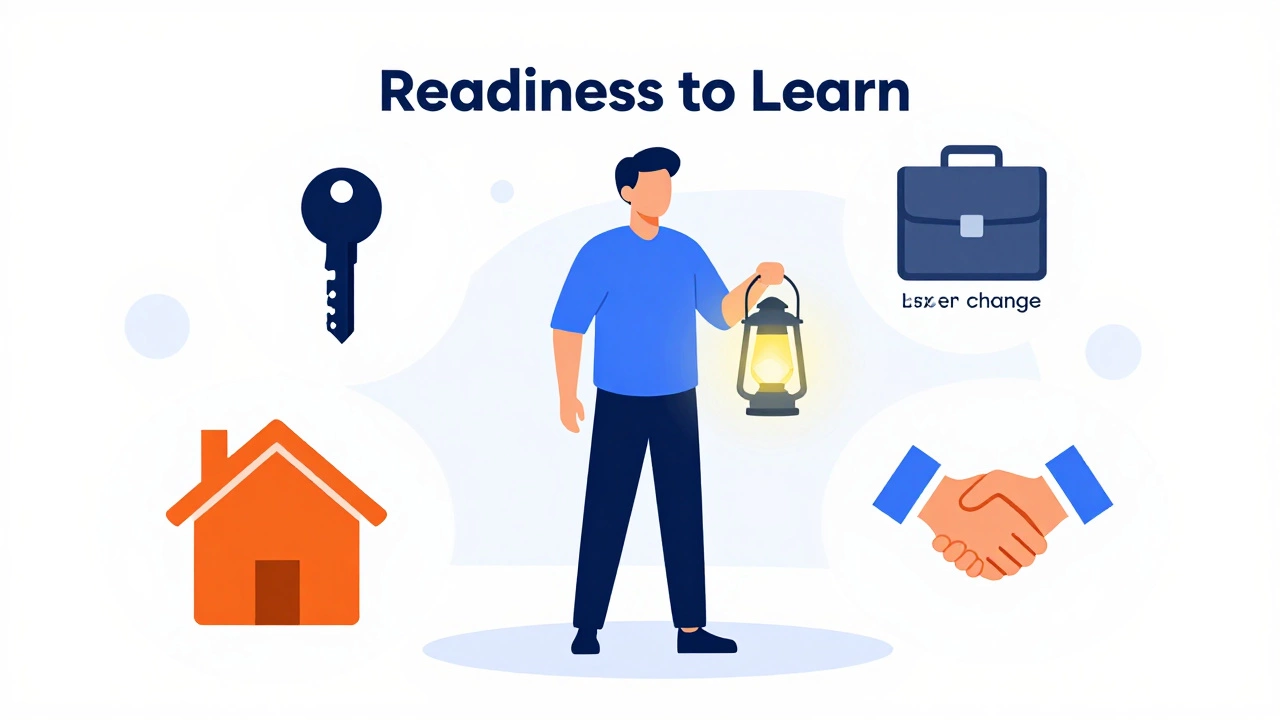
Pillar 4: Readiness to Learn
Children are ready to learn based on their biological or chronological age. Adults are ready to learn based on social roles and developmental tasks. You’re likely more interested in learning about tax law when you buy your first home than when you were twenty-two. Your readiness is triggered by life events.
This pillar suggests that timing is everything. Training programs must align with the learner’s current stage of life or career. For instance, leadership training is most effective when an employee is actually stepping into a management role, not years before. If you try to teach conflict resolution to someone who hasn’t yet experienced team friction, it won’t resonate. The content must match the immediate context of their lives. Organizations often miss this by offering generic training schedules rather than just-in-time learning resources that appear when the need arises.

Pillar 5: Orientation to Learning
Finally, adults are life-centered (or task-centered) rather than subject-centered. They don’t want to memorize chapters of a textbook just for the sake of knowing facts. They want to know how to apply those facts to a specific task right now. Their focus is on performance improvement.
This means shifting away from theoretical lectures toward practical simulations. If you’re teaching customer service, don’t start with the history of retail. Start with a role-play of a difficult customer interaction. Adults judge the value of learning by its utility. If they can’t see how it helps them do their job better today, they’ll dismiss it as busywork. This orientation requires educators to design activities that mimic real-world scenarios, allowing learners to practice skills in a safe environment before applying them on the job.
Putting the Pillars into Practice
So, how do you use this in real life? Whether you’re a manager running a team meeting or an instructor designing a course, here is a quick checklist:
- Explain the ‘Why’: Always start with the benefit. How does this solve a problem?
- Offer Choice: Let learners have some control over the pace or path.
- Tap into Experience: Ask questions like, “How have you handled this before?”
- Check Timing: Is this relevant to their current role or life stage?
- Focus on Application: Use case studies and simulations, not just theory.
By following these steps, you move from being a lecturer to a facilitator. You stop pushing information and start enabling growth. This shift is crucial in today’s fast-paced world where continuous learning is not optional-it’s survival.
Common Pitfalls to Avoid
Even well-meaning educators fall into traps. One common mistake is assuming that because someone is an adult, they don’t need structure. While adults want autonomy, they still need clear goals and feedback. Another pitfall is ignoring emotional barriers. Adults often fear looking foolish in front of peers. Creating a psychologically safe environment where mistakes are seen as learning opportunities is essential. Finally, don’t overload them. Adults juggle many responsibilities. Respect their cognitive load by keeping sessions focused and concise.
Who developed the 5 pillars of adult learning?
The principles were popularized by American educator Malcolm Knowles in the 1970s and 80s. He coined the term "andragogy" to distinguish adult learning methods from traditional pedagogy.
What is the difference between pedagogy and andragogy?
Pedagogy is child-centered, where the teacher directs the learning and the student is dependent. Andragogy is learner-centered, where the adult is self-directed, brings prior experience, and focuses on practical application.
Why is 'readiness to learn' important for adults?
Adults are motivated to learn when the knowledge helps them cope with real-life situations or tasks. If the timing doesn't match their current social or professional role, they are less likely to engage effectively.
How can I apply these pillars in a workplace training session?
Start by explaining why the training matters to their daily jobs. Allow them to share past experiences related to the topic. Use role-playing or case studies instead of long lectures. Ensure the content solves an immediate problem they face.
Do these principles apply to online learning?
Yes, absolutely. Online platforms often excel at supporting self-directed learning. You can enhance this by adding forums for peer discussion (leveraging experience) and ensuring modules are short and task-focused (orientation to learning).