
Andragogy Training Audit Tool
Use this tool to audit your current training module. Check the boxes that apply to your lesson plan to see your Adult Learning Readiness Score.
Ever tried to teach a grown adult something new, only to have them tune out or push back? It's because adults aren't just 'big kids.' If you treat a 40-year-old professional like a middle-schooler, they'll check out mentally within ten minutes. Adults bring a lifetime of experience, a tight schedule, and a deep-seated need to know why they are doing something before they'll even open a notebook.
To get through to an adult learner, you need to shift from pedagogy (teaching children) to Andragogy is the art and science of helping adults learn. This approach, popularized by Malcolm Knowles, recognizes that the internal motivation of an adult is far more powerful than any external grade or certificate.
Quick Takeaways for Educators
- Adults need a clear "why" before they engage.
- Experience is the best textbook; use it.
- Practical application must happen immediately.
- Autonomy and self-direction are non-negotiable.
- Internal motivation outweighs external rewards.
1. The Need to Know
Adults don't do "busy work." If you ask a corporate manager to spend an hour learning a new software tool without explaining how it saves them three hours a week, they'll resent the time spent. This rule is about the gap between where they are and where they want to be.
To satisfy this, start every session with a clear value proposition. Instead of saying "Today we are learning about project management," try "By the end of this hour, you'll know how to cut your weekly meeting time by 20% using a Kanban board." When the benefit is concrete, the brain switches from a state of resistance to a state of curiosity.
2. The Learner's Self-Concept
By the time someone reaches adulthood, they've developed a psychological need to be seen as capable and independent. They hate being told exactly what to do in a rigid, top-down manner. When an instructor takes a "sage on the stage" approach, it clashes with the adult's identity as a self-directed person.
The shift here is moving from being a "teacher" to a "facilitator." Instead of delivering a lecture, provide a set of resources and let the learners navigate the path to the answer. For example, in a workshop on Digital Literacy, don't just demonstrate a feature; give them a problem to solve and let them discover the feature themselves. This respects their autonomy and cements the knowledge through discovery.
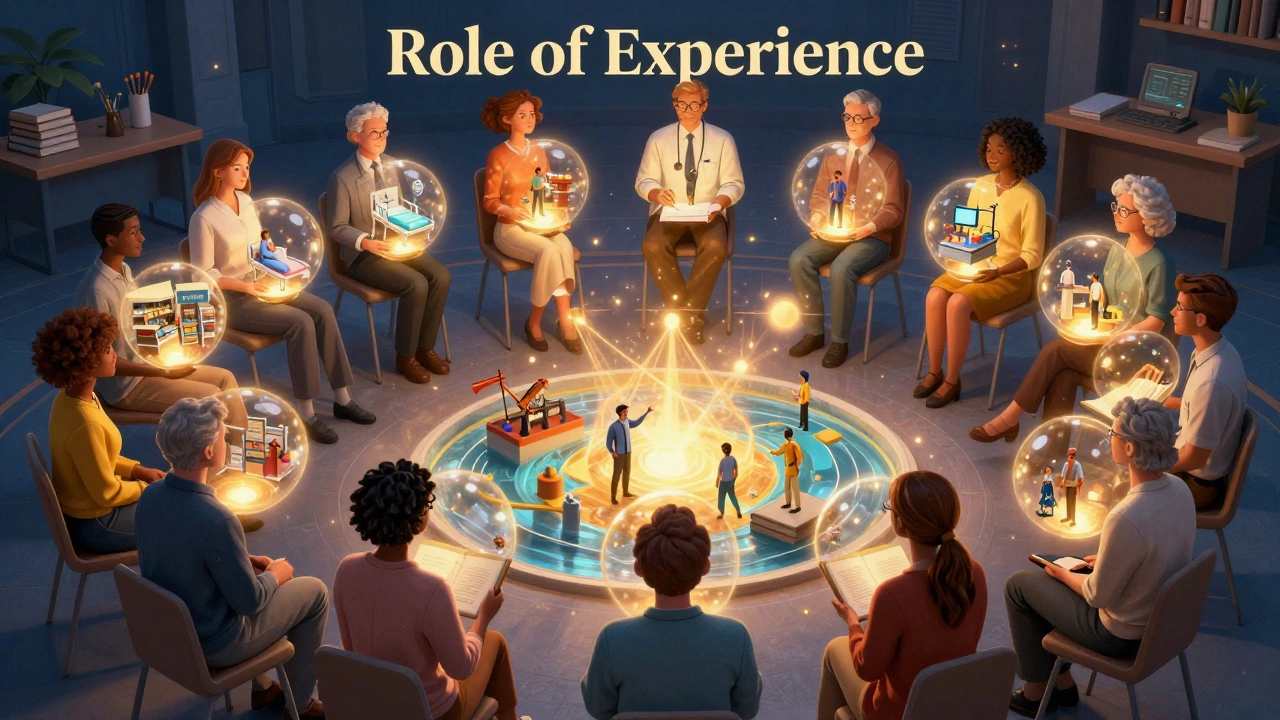
3. The Role of Experience
A classroom of adults is essentially a goldmine of unwritten textbooks. Whether they've spent twenty years in healthcare or ten years in retail, that experience is the primary lens through which they filter new information. If you ignore this experience, you're ignoring the most powerful learning tool available.
Use techniques like peer-to-peer sharing or case study analysis. If you're teaching leadership skills, don't just give a definition of "effective communication." Ask the group to share a time they dealt with a difficult employee and analyze why that specific interaction succeeded or failed. This transforms the lesson from a theoretical exercise into a practical reflection.
| Feature | Pedagogy (Kids) | Andragogy (Adults) |
|---|---|---|
| Dependency | High (Dependent on teacher) | Low (Self-directed) |
| Motivation | External (Grades/Parents) | Internal (Growth/Problem-solving) |
| Experience | Limited/Building | Rich/Foundational |
| Orientation | Subject-centered | Task-centered |
4. Readiness to Learn
Adults become ready to learn when they experience a "trigger" in their real life. This is often linked to a role change or a new challenge. A new parent is suddenly incredibly ready to learn about child nutrition; a newly promoted manager is suddenly desperate to understand Conflict Resolution. If the training doesn't align with their current life stage, it will feel irrelevant.
The key is timing. Pushing a complex technical module on an employee who is currently overwhelmed by a quarterly deadline is a recipe for failure. The most effective training happens exactly when the learner feels the "pain" of not knowing the information. This is why "just-in-time" learning is replacing the traditional "just-in-case" corporate training model.
5. Orientation to Learning
Children learn to pass a test or move to the next grade. Adults learn to solve a problem. This is the difference between subject-centered and problem-centered learning. An adult isn't interested in the history of accounting for the sake of history; they want to know how to balance their specific budget by Friday.
To apply this, structure your content around real-world scenarios. Instead of a chapter on "The Laws of Physics," create a module called "How to Fix Your Home HVAC System Using Thermodynamics." When the focus is on the application, the technical details are absorbed naturally because they are required to reach the solution.
6. Internal Motivation
While a raise or a promotion (extrinsic motivators) can get an adult into the room, they won't keep them engaged. True adult learning is driven by Intrinsic Motivation-the internal desire for self-esteem, quality of life, or personal satisfaction. They want to feel competent and proud of their progress.
Avoid over-relying on badges or superficial rewards. Instead, focus on the "Aha!" moment. When a learner realizes they can now perform a task that used to intimidate them, that hit of dopamine is more powerful than any certificate. Acknowledge their progress in a way that highlights their growing mastery, not just their attendance.

7. The Need for Immediate Application
Adults have a very low tolerance for "we'll use this in three months." Because their time is limited, they need to see the immediate utility of what they've learned. If there is a long gap between the lesson and the application, the knowledge evaporates. This is known as the "forgetting curve."
Implement a "Learn-Do-Reflect" cycle. Give a ten-minute explanation, let them spend twenty minutes applying it to a real project, and then spend ten minutes discussing the results. If you're teaching a digital tool like Trello, have them build their actual current work project board during the session. By the time they leave the room, the tool is already integrated into their workflow.
Common Pitfalls in Adult Education
Many instructors fall into the trap of "The Expert's Curse." They know so much about the topic that they forget how it feels to be a beginner. This leads to over-explaining basic concepts or using jargon that alienates the learner. Another mistake is the rigid schedule. Adults have unpredictable lives; a strict "no late entries" policy in a continuing education course can cause a high dropout rate for people juggling kids and careers.
To avoid these, build flexibility into your design. Use modular content that can be consumed in chunks. If a learner misses a live session, provide a recorded version or a concise summary. This acknowledges the reality of their adult lives without compromising the quality of the education.
Can these rules be applied to online learning?
Absolutely. In fact, they are essential for online courses. To apply the "Self-Concept" rule, give students a choice in how they complete an assignment (e.g., a video vs. a written report). For "Immediate Application," use interactive quizzes and simulation-based labs instead of long video lectures.
What is the difference between pedagogy and andragogy?
Pedagogy is the traditional method of teaching children, where the teacher has full control and the student is a dependent recipient of knowledge. Andragogy is the adult-centric model where the learner is an active partner, leveraging their own life experience to drive the learning process.
How do I deal with a resistant adult learner?
Resistance usually happens when the "Need to Know" isn't met. Stop the lesson and ask them directly: "How would this be useful in your actual daily work?" Let them define the value. If they can't find a use for it, pivot the material to align with their specific challenges.
Are all adults self-directed learners?
Not necessarily. Some adults have spent years in rigid educational systems and may initially struggle with autonomy. In these cases, you start with a bit more guidance (pedagogical support) and gradually "fade" the scaffolding as they gain confidence and shift toward andragogy.
Why is experience so important in adult learning?
Experience provides the "hooks" that new information can latch onto. It's much easier for an adult to understand a complex concept if they can relate it to something they've already lived through. Without that connection, the new information feels abstract and forgettable.
Next Steps for Your Training Program
If you're designing a course today, start by auditing your current materials. Look for areas where you're lecturing for more than 15 minutes without a practical application-those are your danger zones. Replace a few of those sections with a peer-discussion or a problem-solving exercise. Your goal isn't to be the source of all knowledge, but the guide who helps the adults unlock the knowledge they are already capable of finding.