Early Years Education Explorer
Discover what truly matters in early childhood. Click on the pillars below to see how they interconnect, explore the progression of play, and check your readiness for choosing a quality program.
The Four Pillars of Effective Early Learning
Cognitive
Thinking & Problem SolvingSocial-Emotional
Empathy & Self-RegulationPhysical
Motor Skills & Well-beingLanguage
Communication & LiteracyPlay Progression Simulator
Select a stage to see how children develop social skills through play.
Solitary Play
Description: Child plays alone, focused on their own activity.
Key Skill Developed: Independence, concentration, self-regulation.
Spotting Quality: Parent's Checklist
Check off these signs when visiting a potential provider. A score of 4+ indicates a strong candidate.
You might think early years education is just fancy daycare. You drop off a toddler, they eat crackers, nap, and maybe finger-paint until the walls look like abstract art. But if you ask a developmental psychologist or a seasoned preschool teacher in Dublin, they’ll tell you something different. Early Years Education is the structured yet flexible learning environment for children from birth to age five that builds the cognitive, social, and emotional foundations for all future learning. It’s not about forcing kids to read at three. It’s about wiring their brains for curiosity, resilience, and connection.
Why does this matter now more than ever? Because we’re seeing a post-pandemic generation with delayed social cues. Parents are anxious about "school readiness." And schools are reporting that children arrive knowing colors but unable to share a toy. Understanding the true meaning of early years education helps you cut through the noise. It shifts your focus from academic pressure to human development. This guide breaks down what it actually is, why it works, and how you can spot high-quality programs without getting lost in jargon.
Beyond Daycare: Defining the Core Purpose
Let’s clear up the biggest misconception right away. Early years education isn’t just supervision while parents work. That’s childcare. The difference lies in intent. Childcare keeps a child safe and fed. Early years education actively stimulates neural pathways during the most critical window of brain development.
Consider the science. By age five, 90% of a child’s brain has already developed. This isn’t just biological trivia; it’s a roadmap. During these years, synapses form at a rate of over one million per second. These connections are pruned or strengthened based on experience. If a child experiences consistent, responsive interaction, those pathways solidify. If they don’t, the brain assumes those functions aren’t needed and trims them away.
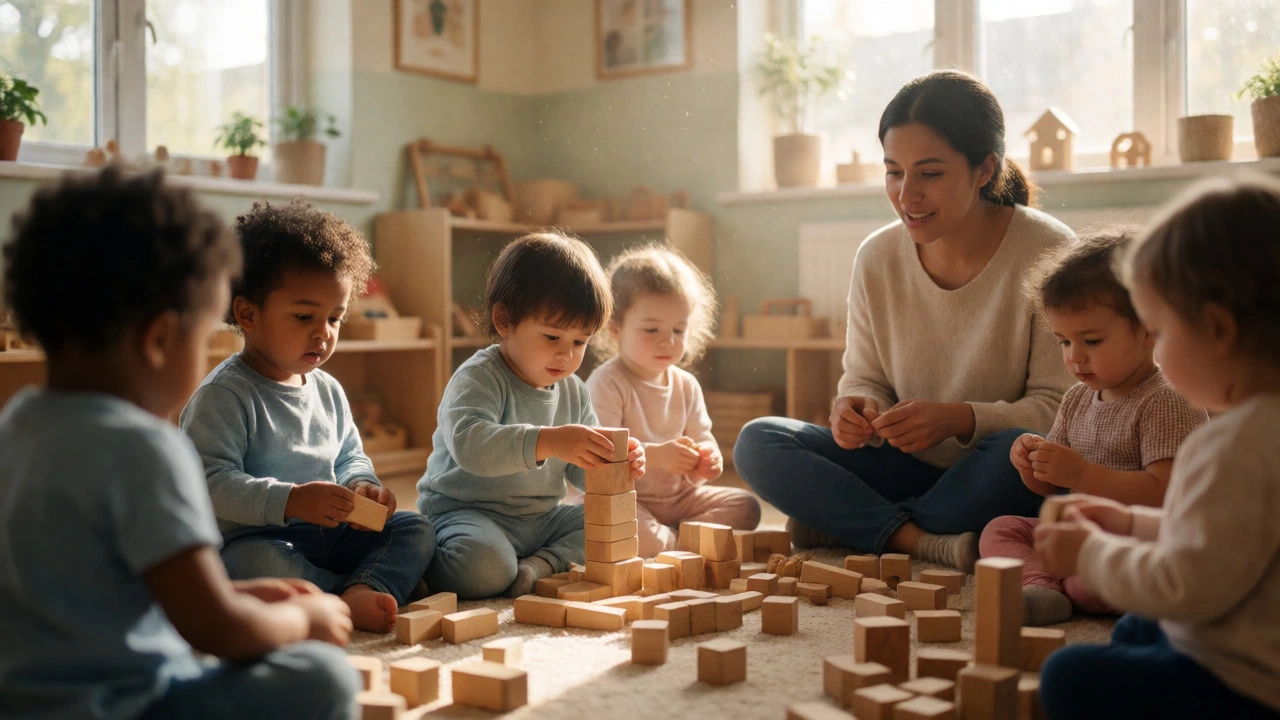
So, the meaning of early years education is essentially optimization. It’s providing the specific inputs-language, movement, problem-solving-that the brain needs to build its architecture. It’s less about teaching facts and more about teaching the brain how to learn. When a four-year-old stacks blocks, they aren’t just playing. They’re testing gravity, understanding balance, and practicing fine motor control. In a well-designed program, an educator recognizes this and asks, "What happens if we put the big block on top?" That question turns play into physics.
The Four Pillars of Effective Early Learning
If you walk into a quality early years setting, you won’t see rows of desks. You’ll see zones. Why? Because effective early learning rests on four pillars that must be integrated, not separated. Ignoring any one of them leads to gaps later on.
- Cognitive Development: This involves thinking, reasoning, and problem-solving. It’s not just counting to ten. It’s recognizing patterns in nature, sorting objects by shape, and predicting what comes next in a story.
- Social-Emotional Skills: Often undervalued, this is arguably the most critical pillar. Can the child wait their turn? Do they recognize when a friend is sad? Can they manage frustration without hitting? These soft skills predict adult success better than IQ scores.
- Physical Well-being: Gross motor skills (running, jumping) and fine motor skills (holding a pencil, buttoning a coat) are directly linked to executive function. A child who struggles to hold scissors often struggles to write, which affects confidence across all subjects.
- Language and Communication: This goes beyond vocabulary size. It’s about narrative structure-telling a story with a beginning, middle, and end-and listening comprehension. It’s the foundation for literacy long before formal reading instruction begins.
Notice the interplay here. You can’t separate physical from cognitive. When a child climbs a jungle gym, they’re assessing risk (cognitive), coordinating muscles (physical), and perhaps negotiating who goes first (social). High-quality programs design activities that hit multiple pillars simultaneously.
Play Is Not Just Fun: It’s Serious Work
Parents often worry: "Is my child actually learning if they’re just playing?" Yes. Absolutely. Play is the primary language of childhood. It is the mechanism through which children process complex information. There are different types of play, each serving a distinct developmental purpose.
| Play Type | Description | Key Skill Developed |
|---|---|---|
| Solitary Play | Child plays alone, focused on their own activity. | Independence, concentration, self-regulation. |
| Parallel Play | Children play side-by-side with similar toys but do not interact. | Awareness of others, sharing space, mimicking behavior. |
| Associative Play | Children interact, share materials, but have no common goal. | Communication, negotiation, basic cooperation. |
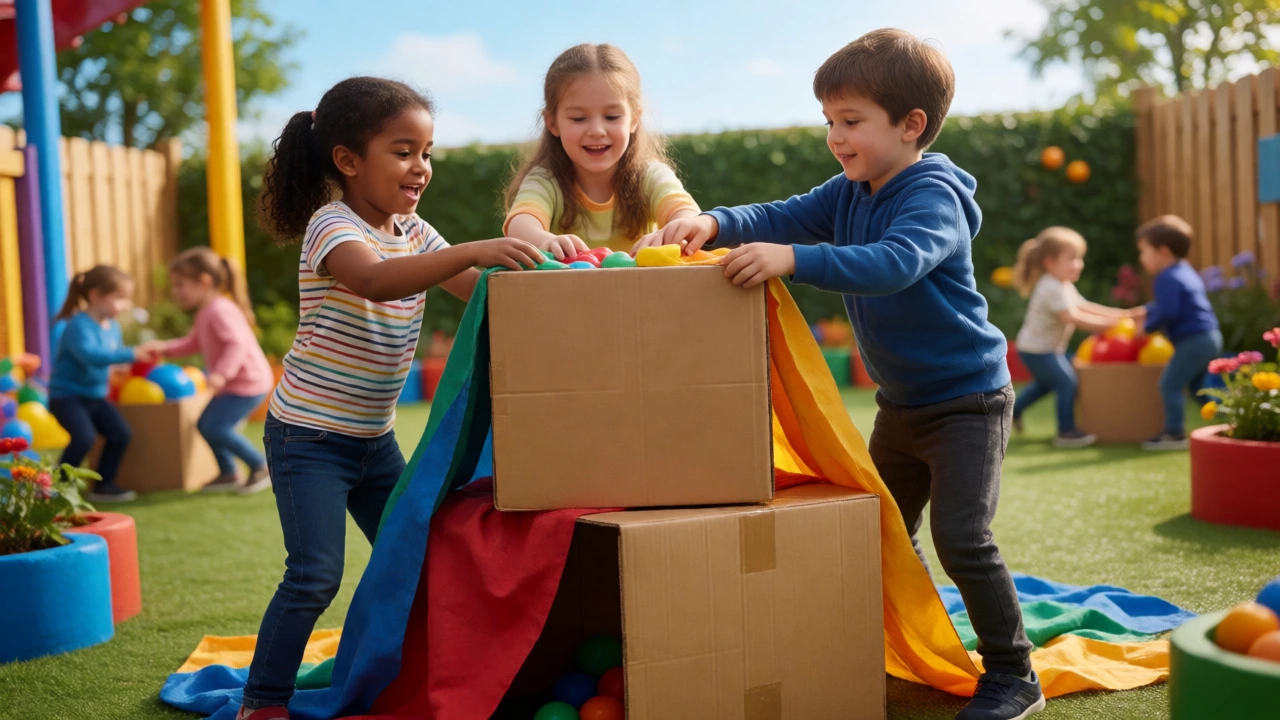
| Cooperative Play | Children organize around a shared goal or role-play scenario. | Teamwork, leadership, complex problem-solving. |
In Ireland, the Síolta Framework emphasizes this progression. Educators observe where a child sits on this spectrum and gently scaffold their growth. For example, if a child only engages in solitary play, the teacher might sit nearby and narrate their actions, bridging the gap toward parallel play. This intentional observation transforms "watching kids play" into data-driven educational practice.
The Role of the Educator vs. The Parent
A common question is whether early years education replaces parenting. It doesn’t. It partners with it. The relationship between home and setting is vital. Research consistently shows that parental involvement is the single strongest predictor of a child’s academic achievement, even more so than socioeconomic status.
However, the roles differ. Parents provide security, unconditional love, and cultural context. Early years educators provide peer interaction, structured challenge, and exposure to diverse perspectives. Think of it as two wings of a bird. One wing offers stability; the other offers flight.
In a good setting, communication flows both ways. Teachers shouldn’t just send home worksheets. They should share observations: "Today, Leo negotiated a conflict over the truck without crying. He used words instead of hands." This feedback loop allows parents to reinforce positive behaviors at home. Conversely, parents can inform teachers about changes at home-a new sibling, a move-that might affect a child’s behavior. This holistic view ensures the child feels seen and supported.
Identifying Quality: What to Look For
Not all programs labeled "early years education" are created equal. Some are rigid, pushing academics too soon. Others are chaotic, lacking direction. How do you spot the good ones? Ignore the marketing brochures. Visit the center. Observe the interactions.
Here’s a quick checklist for parents evaluating a potential provider:
- Look at the children’s faces. Are they engaged? Bored? Anxious? Happy engagement looks like focused intensity, not just smiling for the camera.
- Listen to the teacher-child ratio. Ideally, one adult per eight to ten children for ages three to five. Fewer adults mean less individual attention.
- Check the environment. Is it cluttered or curated? Materials should be accessible to children, not locked away. There should be quiet corners for reflection and active spaces for movement.
- Ask about assessment. Avoid places that use standardized tests for toddlers. Look for portfolio-based assessments where photos and notes document progress over time.
- Gauge the staff turnover. Consistency matters. Children thrive on routine and familiar faces. High turnover disrupts attachment formation.
Also, consider the curriculum framework. In Ireland, many centers follow the EYFS (Early Years Foundation Stage) principles adapted locally, or the national Síolta standards. Ask how they implement these. Do they talk about "learning outcomes" or "child-led exploration"? The latter is usually a better sign.

Common Pitfalls and Misconceptions
Even well-meaning parents fall into traps. The biggest one is the "Academic Push." We live in a competitive world, and it’s tempting to want your child reading chapter books at four. But research suggests that premature academic drilling can kill intrinsic motivation. A child forced to memorize sight words may hate reading by age seven. A child who loves stories because they were read to daily will naturally decode text when ready.
Another pitfall is underestimating the value of boredom. Modern schedules are packed with enrichment classes. But unstructured time allows children to develop creativity and self-soothing skills. If every minute is scheduled, who teaches them how to entertain themselves? Early years education protects downtime as fiercely as active learning.
Finally, there’s the myth that boys need rough-and-tumble play more than girls. While gender differences exist, preferences vary widely among individuals. Good programs offer varied opportunities for all children, avoiding stereotypes that limit potential. A girl might love building robots; a boy might prefer dramatic play. Supporting these interests builds confidence regardless of gender norms.
The Long-Term Impact: Why It Pays Off
Investing in early years education yields returns that last decades. The Perry Preschool Project, a landmark longitudinal study, followed disadvantaged children from the 1960s into adulthood. Those who received high-quality early education had higher earnings, lower crime rates, and better health outcomes compared to the control group. The return on investment was estimated at $7 for every $1 spent.
While that study is old, recent neuroscience confirms the mechanisms. Secure attachment formed in early years reduces cortisol levels, lowering chronic stress. Lower stress means better immune function and mental health. Social skills learned at age four reduce bullying incidents in middle school. Cognitive flexibility gained through play aids adaptability in the modern workforce.
It’s not just about grades. It’s about becoming a functional, happy human being. Early years education lays the groundwork for empathy, critical thinking, and resilience. These traits don’t appear out of nowhere. They are cultivated in the sandbox, the circle time, and the messy art corner.
Frequently Asked Questions
At what age should early years education start?
Formal programs typically begin around age three, but informal early learning starts at birth. From infancy, responsive caregiving, talking, and singing constitute early education. Structured settings like nurseries or preschools usually cater to children aged 2-5, focusing on socialization and pre-academic skills appropriate for their developmental stage.
Is early years education the same as kindergarten?
No. Kindergarten is often part of the primary school system and may have a more formal academic curriculum. Early years education covers a broader age range (birth to five) and prioritizes play-based, holistic development over direct instruction. However, in some systems, the lines blur, with kindergarten serving as the final year of early childhood education.
How does screen time affect early years education?
Excessive passive screen time can hinder language development and social skills. The World Health Organization recommends limiting screen time for children under five. High-quality early years education encourages interactive media use (like video calling relatives) rather than passive viewing. Physical play and face-to-face interaction remain superior for brain development.
Do children need to know letters and numbers before starting?
No. Early years education is designed to introduce these concepts naturally. Knowing letters beforehand can sometimes lead to boredom if the pace isn't adjusted. Focus on phonological awareness (hearing sounds) and numeracy concepts (counting objects) rather than rote memorization. Curiosity and willingness to explore are more important prerequisites than specific knowledge.
How can I support early years education at home?
Engage in daily routines together. Cook together to practice math and following instructions. Read aloud daily to build vocabulary. Encourage open-ended play with simple toys like blocks or cardboard boxes. Ask open questions like "What do you think will happen next?" instead of yes/no questions. Your presence and attention are the most powerful educational tools.