
GCSE Revision Timeline Planner
Select Your Subjects:
Total Months Available
From now until exams
Subjects to Cover
Selected subjects
Daily Study Hours
Recommended per day
Your Revision Phases
Subject Priority Schedule
It is May 2026, and if you are a student or parent looking at the upcoming exam season, the question on everyone's mind is simple but stressful: How long before GCSEs should you start revising? The short answer? You shouldn't wait until October. In fact, waiting that long is one of the biggest mistakes students make every year. The truth is, successful revision isn't a last-minute sprint; it is a marathon that starts much earlier than most people realize.
I have seen countless students burn out in January because they tried to cram two years of learning into eight weeks. It doesn't work. Our brains don't store information like hard drives; they need time, repetition, and sleep to encode memories properly. If you want to walk into your exams feeling prepared rather than panicked, you need a strategy that begins well before the first paper is scheduled.
The Ideal Starting Point: Year 11 Begins
The best time to start your formal revision journey is actually the moment Year 11 begins in September. This might sound early, especially if you are used to finishing coursework and then hitting the books. However, this approach allows you to spread the load evenly across the academic year. By starting in September, you give yourself roughly nine months to cover all subjects thoroughly.
Why September? Because it gives you the luxury of time. You can tackle difficult subjects first when your energy levels are high and the pressure is low. For example, if Mathematics or Physics has always been a struggle, tackling these in September and October means you have plenty of buffer time to revisit them later. If you wait until February, you will be juggling six or seven subjects simultaneously, leading to cognitive overload.
Starting early also aligns with how memory works. Research in educational psychology consistently shows that spaced repetition is far more effective than massed practice (cramming). When you review material over several months, you move knowledge from short-term to long-term memory. This makes recall during the actual exam significantly easier and less stressful.
A Phased Approach to Revision
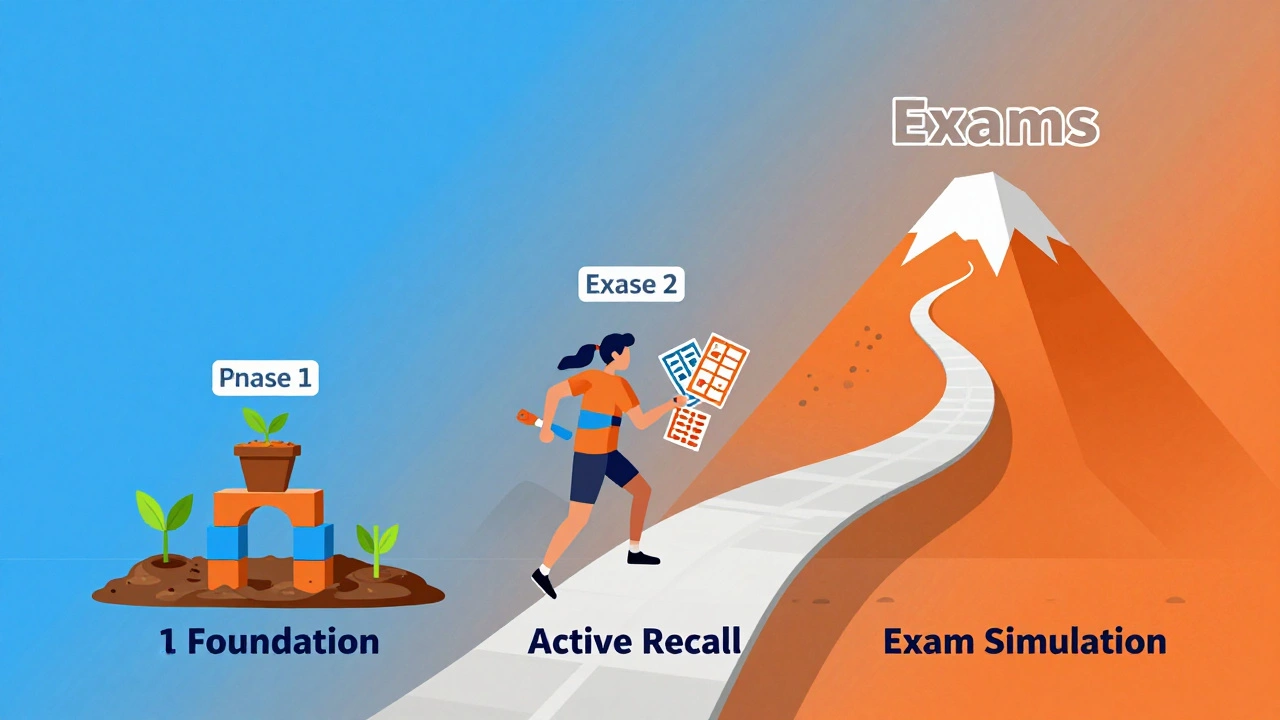
Instead of viewing revision as one giant block, break it down into three distinct phases. This structure helps maintain momentum and prevents burnout. Here is how a realistic timeline looks:
- Phase 1: Foundation Building (September - December): Focus on understanding core concepts. Don't worry about past papers yet. Read through your textbooks, watch explanatory videos, and create summary notes. Identify weak areas early. If you find Chemistry tricky, spend extra time here. The goal is clarity, not memorization.
- Phase 2: Active Recall & Practice (January - March): This is where you shift gears. Start using active recall techniques like flashcards and self-testing. Begin doing topic-specific questions. If you studied Biology cells in October, test yourself on them now. This phase bridges the gap between knowing something and being able to apply it under pressure.
- Phase 3: Exam Simulation (April - June): Now it is time for full-length past papers under timed conditions. This mimics the real exam environment. Analyze your mistakes carefully. Are you losing marks due to lack of knowledge or poor time management? Adjust your strategy accordingly. This final polish ensures you are ready for anything the exam board throws at you.
This phased approach ensures that by the time the exams arrive, you are not learning new content but rather refining skills you have already developed. It transforms revision from a chore into a structured process.
Subject-Specific Timing Strategies
Not all subjects require the same amount of time upfront. Some benefit from continuous engagement, while others can be tackled in shorter bursts. Understanding this nuance can save you hours of unnecessary stress.
| Subject Category | Best Time to Start Deep Revision | Key Strategy |
|---|---|---|
| Core Subjects (Maths, English) | September (Year 11 Start) | Daily practice problems; consistent reading/writing habits |
| Sciences (Biology, Chemistry, Physics) | October | Concept mapping followed by practical application questions |
| Humanities (History, Geography) | November | Essay planning and source analysis drills |
| Languages (French, Spanish) | September | Daily vocabulary acquisition and listening practice |
| Creative Arts (Art, Drama) | Ongoing (Coursework focus) | Portfolio development alongside theory revision |
Notice how Core Subjects and Languages start earliest. Why? Because proficiency in these areas builds cumulatively. You cannot learn French grammar in a week. Similarly, mathematical fluency requires daily reinforcement. Humanities subjects, while heavy on content, often rely on essay structures that can be mastered once understood, allowing for a slightly later start date.
The Danger of Cramming
Let’s address the elephant in the room: cramming. Many students believe that pulling all-nighters in April will yield results. The data says otherwise. Studies show that sleep deprivation severely impairs cognitive function, particularly memory consolidation and problem-solving abilities. When you cram, you are essentially tricking your brain into thinking it knows the material because it was recently exposed to it. But without proper rest, that knowledge evaporates quickly.
Imagine trying to fill a bucket with a hole in the bottom. No matter how fast you pour water in, it leaks out. Cramming is pouring water faster than the leak, giving an illusion of fullness. Spaced revision patches the holes gradually, ensuring retention. If you start revising only four months before exams, you are relying on short-term memory, which is fragile and prone to failure under stress.
Furthermore, cramming increases anxiety. High cortisol levels interfere with memory retrieval. Students who revise steadily report lower stress levels and higher confidence. They know they have covered the syllabus multiple times. Those who cram live in fear of forgetting everything once they enter the exam hall.

Building a Sustainable Routine
Starting early is useless if your routine is unsustainable. You need a system that fits into your life, not one that consumes it. Here are some practical tips for building a revision habit that lasts:
- Use the Pomodoro Technique: Study for 25 minutes, then take a 5-minute break. After four cycles, take a longer break. This prevents mental fatigue and keeps focus sharp.
- Schedule Downtime: Include weekends off or half-days free from studying. Rest is productive. Your brain processes information during downtime. Skipping breaks leads to diminishing returns.
- Create a Dedicated Space: Have a specific desk or corner for revision. Over time, your brain associates this space with focus, making it easier to get started.
- Track Progress Visibly: Use a checklist or calendar to mark completed topics. Seeing progress boosts motivation and provides a sense of accomplishment.
- Involve Others: Discuss concepts with friends or family. Teaching someone else is one of the most effective ways to solidify your own understanding.
Consistency beats intensity. Studying for one hour every day is far more effective than studying for ten hours once a week. Small, regular efforts compound over time, leading to significant gains by exam season.
Adjusting for Individual Needs
Every student is different. Some grasp concepts quickly; others need more time. That is okay. The timeline above is a guideline, not a rigid rule. If you struggle with a particular subject, start revising it even earlier. Conversely, if you excel in another, you can allocate less time there and redirect effort elsewhere.
Consider your learning style. Visual learners might benefit from creating diagrams and mind maps early on. Auditory learners could record summaries and listen to them during commutes. Kinesthetic learners may prefer hands-on activities or teaching others. Tailor your methods to what works best for you.
If you feel overwhelmed, seek help early. Teachers, tutors, and online resources are available to support you. Don’t wait until you are drowning. Asking questions in September is infinitely better than struggling in silence in May.
Is it too late to start revising in January?
While ideal revision starts in September, starting in January is still viable if you adopt an intensive but structured approach. Focus on high-yield topics first, use active recall techniques, and prioritize past papers. However, expect higher stress levels and limit flexibility in addressing weak areas.
How many hours per day should I revise?
Aim for 2-3 focused hours daily outside school time. Quality matters more than quantity. Break sessions into manageable chunks with breaks. Avoid marathon study days that lead to burnout. Consistent daily effort yields better results than sporadic intense sessions.
What is the most effective revision technique?
Active recall combined with spaced repetition is scientifically proven to be the most effective method. Test yourself frequently instead of passively rereading notes. Use flashcards, quizzes, and past papers to reinforce memory retrieval over time.
Should I revise alone or in groups?
Both have merits. Solo revision allows deep focus and personalized pacing. Group study aids discussion and clarifies doubts through peer explanation. Use group sessions for complex topics or essay planning, and solo time for memorization and practice questions.
How do I handle revision burnout?
Recognize signs early: irritability, lack of motivation, physical fatigue. Take immediate breaks, engage in non-academic activities, exercise, and ensure adequate sleep. Reassess your schedule to reduce workload temporarily. Remember, rest is part of the process, not a deviation from it.