Early Learning Activity Calculator
Discover simple, research-backed activities that build your child's foundation for learning. Based on Harvard and University of Pennsylvania studies from the article.
Your Child's Early Learning Activity
Why this matters:
Cumulative impact:
Early education isn’t just about teaching kids their ABCs or counting to ten. It’s the foundation for everything they’ll learn later in life - how to think, how to feel, how to connect with others. If you’ve ever watched a toddler figure out how to stack blocks or a three-year-old share a toy for the first time, you’ve seen early education in action. It’s not something that happens in a classroom alone. It happens in the way a parent reads a book before bed, how a caregiver responds to a crying baby, or how a preschool teacher helps a child calm down after a tantrum.
Brain Development in the First Five Years
The human brain grows faster between birth and age five than at any other time in life. By age three, a child’s brain has formed about 80% of its adult structure. By age five, it’s at 90%. This isn’t just a statistic - it’s a window of opportunity. Every experience, every conversation, every song sung or story read, physically shapes the wiring in a child’s brain. Connections form between neurons based on repetition and response. If a child hears words often, their language centers grow stronger. If they’re comforted when upset, their emotional regulation circuits develop better. Without these experiences, those pathways weaken or disappear.
Studies from Harvard’s Center on the Developing Child show that children who grow up in environments rich with talk, play, and responsive care are up to 50% more likely to develop strong literacy and math skills by kindergarten. This isn’t luck. It’s biology.
Why Skills Learned Early Stick
Think of early learning like building a house. You wouldn’t lay the foundation with sand and expect the walls to hold. Early education builds the foundation for learning - not just reading and math, but focus, patience, problem-solving, and self-control. These are called executive function skills. They’re the mental tools that let kids wait their turn, follow instructions, plan ahead, and manage frustration.
One famous study followed 130 children from low-income families in North Carolina. Half were given access to high-quality preschool from age three to five. The other half weren’t. By age 27, the group that attended preschool were more likely to have graduated high school, held steady jobs, and earned higher incomes. They were also less likely to be arrested or need public assistance. The difference? It wasn’t because they knew more words at age five. It was because they learned how to learn.
The Social Side of Early Learning
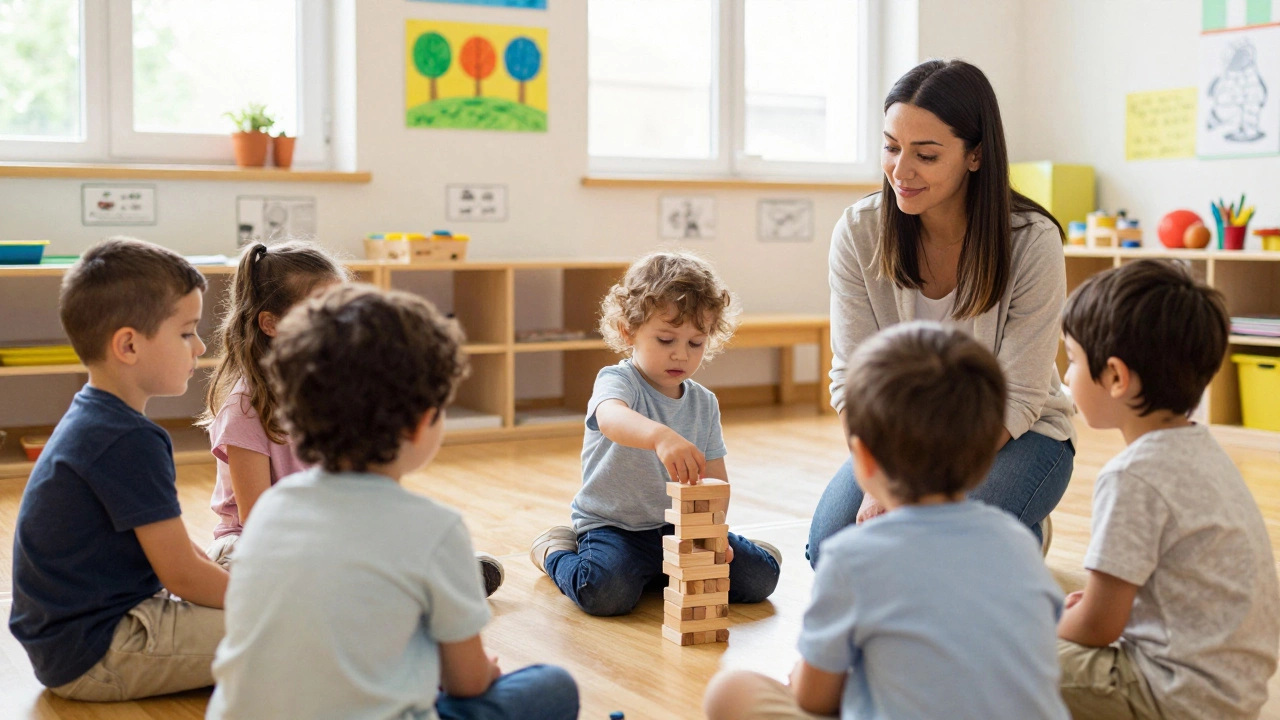
Children don’t learn in isolation. Even babies start picking up social cues before they can speak. Early education settings - whether at home, in daycare, or in preschool - give kids their first real chance to practice being part of a group. They learn to share, to take turns, to recognize when someone is sad or angry. They learn how to ask for help and how to offer it.
When a child is pushed in a playground and says, “I’m mad,” instead of hitting back, that’s early education at work. When a child chooses to comfort a crying friend instead of ignoring them, that’s empathy being built. These aren’t soft skills. They’re survival skills. Research from the University of Pennsylvania found that children who showed strong social-emotional skills in kindergarten were twice as likely to earn a college degree by age 25.
It’s Not Just About School Readiness
Many parents think early education means preparing kids for kindergarten. But that’s too narrow. It’s about preparing kids for life. Children who miss out on early learning are more likely to struggle later - not because they’re less smart, but because they never got the chance to build the mental tools they need.
In Ireland, one in five children start school without the basic language skills needed to keep up. By the end of first grade, those gaps have widened, not closed. That’s not because the schools are failing. It’s because the foundation was never laid.
Early education doesn’t mean flashcards or worksheets. It means talking while cooking, singing while washing dishes, reading bedtime stories even when you’re tired, letting kids explore mud or paint without rushing them to clean up. It means responding to their questions, even the 47th one about why the sky is blue. It means giving them space to make mistakes and figure things out on their own.
What Early Education Looks Like in Real Life
You don’t need a degree in child psychology to support early learning. You just need to be present. Here’s what it looks like in practice:
- Asking open-ended questions: “What do you think will happen if we put this ice cube in the sun?”
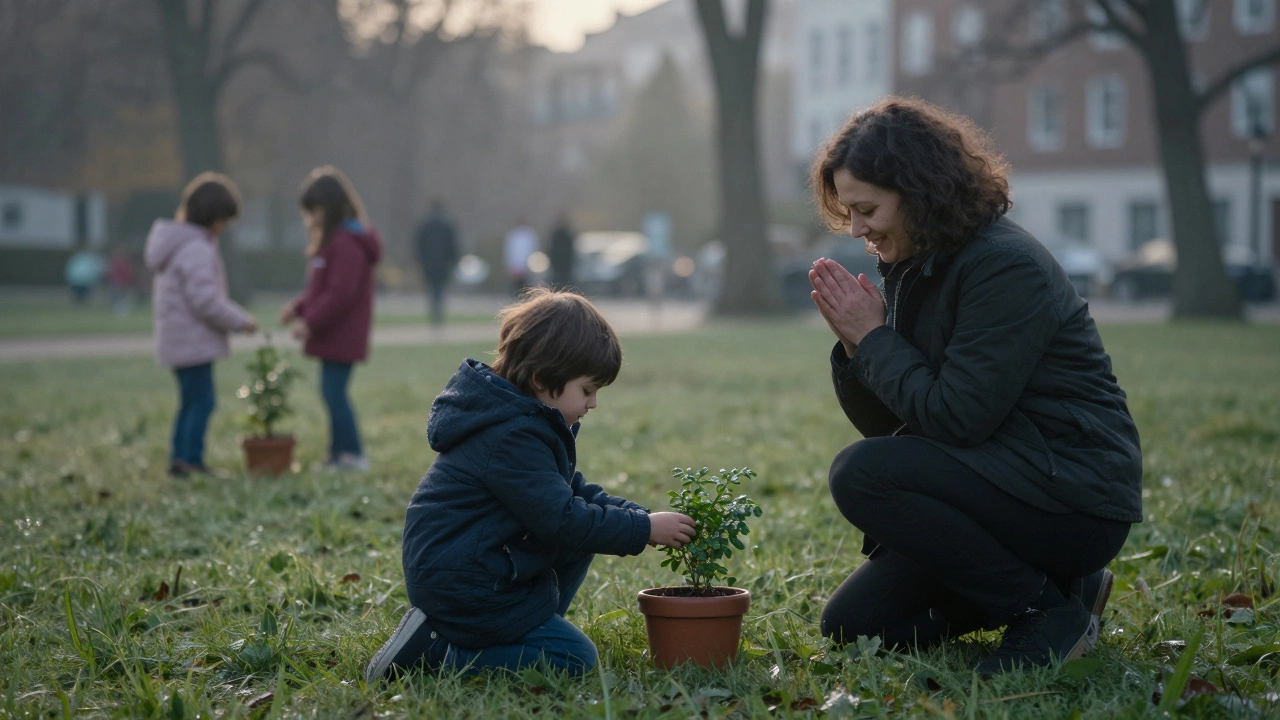
- Letting kids help with simple chores: sorting socks, setting the table, watering plants.
- Playing games that involve rules: memory, Simon Says, building a tower with blocks and knocking it down - then building it again.
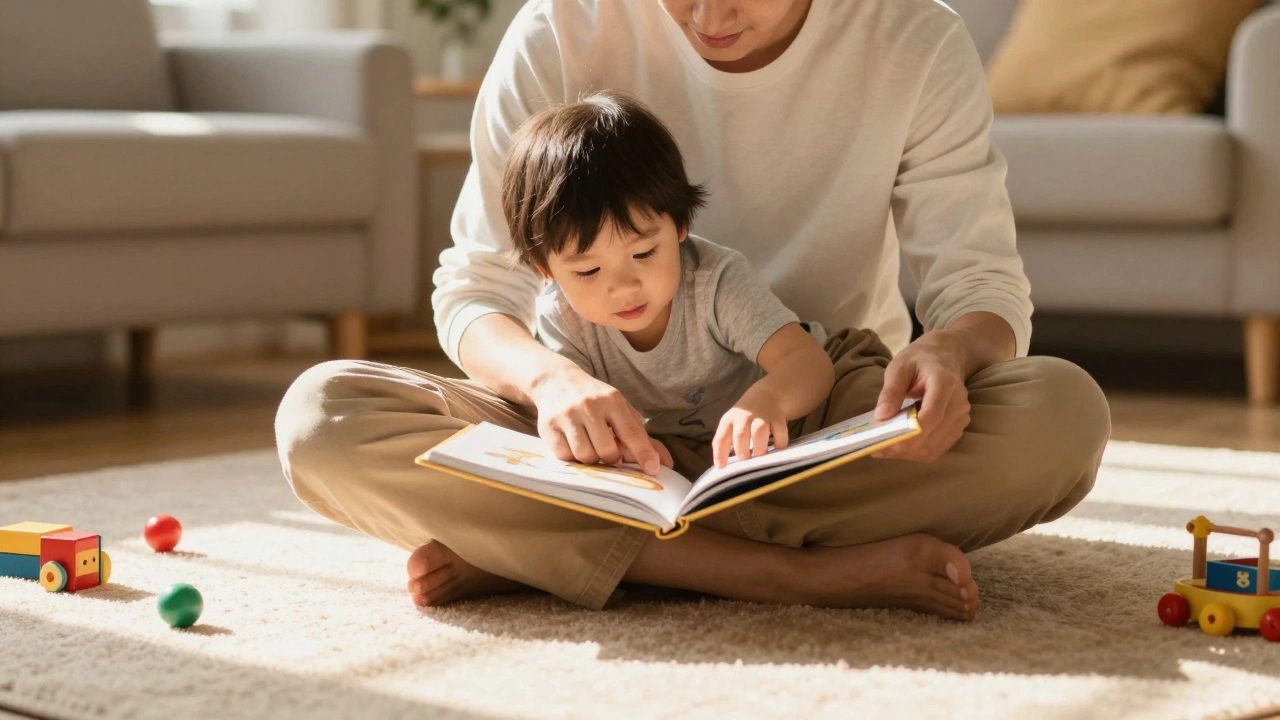
- Reading the same book over and over. Yes, even if you know it by heart. Repetition builds memory and confidence.
- Naming emotions: “I see you’re frustrated because the puzzle piece won’t fit. That’s okay. Let’s try again.”
These aren’t activities you have to schedule. They’re moments you can weave into your day. The magic isn’t in the activity - it’s in the attention.
What Happens When Early Education Is Missing
When children don’t get quality early experiences, the effects show up years later. By age 10, kids who lacked early language exposure are often two to three years behind in reading. By age 15, they’re more likely to drop out. The gap isn’t about intelligence. It’s about opportunity.
Children in care, children in poverty, children with parents working multiple jobs - these aren’t edge cases. They’re the majority in many communities. In Dublin, over 30% of children under five live in households where no adult has completed secondary education. Without support, those children start school already behind. And the system doesn’t catch them up - it just moves on.
That’s why early education isn’t a luxury. It’s equity. It’s the one time in a child’s life when a little bit of support can change the whole trajectory.
It’s Never Too Late - But It’s Easier Early
Some parents worry they’ve waited too long. Maybe their child is four and they just started reading to them every night. Maybe they didn’t know about preschool until now. It’s not too late. The brain is still plastic. But the longer you wait, the harder the climb becomes.
Think of it like planting a tree. You can still plant one at age ten - it will grow. But if you plant it at age two, it has time to grow deep roots before the storm hits. Early education gives children that time.
The best time to start was yesterday. The second-best time is today. A single story read tonight. A conversation about clouds while walking to the park. A moment of patience when a child loses their temper. These aren’t small things. They’re the building blocks of a lifetime.
Is early education only for wealthy families?
No. High-quality early education is available to all families through public programs like Tusla’s Early Years Service, free preschool schemes (like the Early Childhood Care and Education scheme in Ireland), and community-based playgroups. You don’t need to pay for private preschool to give your child a strong start. What matters most is consistent, responsive interaction - talking, listening, playing, and reading together every day.
Can screen time replace early learning?
No. While educational apps can be helpful in small doses, they can’t replace human interaction. A child learns language not from a tablet, but from hearing a parent’s voice, seeing facial expressions, and getting a response when they babble or point. The American Academy of Pediatrics recommends no screen time for children under 18 months, except video chatting. For toddlers, one hour a day of high-quality content is the maximum - and even then, it should be co-viewed with an adult.
What if my child isn’t talking yet?
Every child develops at their own pace. But if a child isn’t babbling by 12 months, doesn’t respond to their name by 15 months, or doesn’t use any words by 18 months, it’s worth talking to a health visitor or pediatrician. Early intervention programs exist for a reason - and they work best when started young. Waiting won’t make it better. Acting now can change everything.
Does early education mean pushing academics too soon?
No. Quality early education is play-based. It’s not about drilling letters or numbers. It’s about exploring, experimenting, and discovering. A child learns math by sorting buttons by color, science by watching water flow, and literacy by pretending to read a menu at a pretend restaurant. Learning happens naturally when children are engaged, curious, and supported - not when they’re forced to sit still and memorize.
How can I help if I work long hours?
Even 10 minutes a day of focused attention makes a difference. Put the phone down. Look your child in the eye. Ask one open-ended question. Read one page of a book. Sing one song. It’s not about quantity of time - it’s about quality of connection. Many working parents use routines like morning cuddles, bedtime stories, or car ride chats to build those moments. Consistency matters more than duration.