Handling children with special needs isn’t about having all the answers-it’s about showing up, listening, and adapting. Every child learns differently, and those with special needs often need more than just a modified worksheet. They need a space where they feel seen, safe, and capable. If you’re a teacher, parent, or caregiver wondering how to truly support them, the answer isn’t found in a one-size-fits-all manual. It’s built through small, consistent actions that honor their unique rhythm.
Start with understanding the child, not the label
Labels like "autism," "dyslexia," or "ADHD" are useful for accessing services, but they don’t tell you who the child is. A child diagnosed with autism might be deeply verbal and love math, while another might be nonverbal but communicate through drawings and laughter. The same goes for dyslexia-some kids read slowly but think creatively; others struggle with letter reversals but have perfect pitch.Instead of asking, "What’s wrong with them?" ask, "What do they need to thrive?" Watch how they respond to noise, light, movement, or silence. Notice what calms them, what overwhelms them, and what makes their eyes light up. One parent shared that her son with sensory processing disorder only focused during math lessons when he could stand at a high table and squeeze a stress ball. That’s not a behavior problem-it’s a learning preference.
Build structure with flexibility
Children with special needs often thrive with routine. Predictability reduces anxiety. But rigid schedules can backfire. The key is structure with room to breathe.Use visual schedules-pictures or icons for morning routine, class activities, and transitions. A child who struggles with verbal instructions might look at a card that says "Reading Time" with a picture of a book, then "Break" with a picture of a snack. This reduces confusion and gives them control.
But if a child melts down during transition time, don’t force the schedule. Pause. Offer a choice: "Do you want to walk to the next room or ride the scooter?" Giving two acceptable options restores agency. That’s not letting them off the hook-it’s teaching them how to manage their own emotions.
Use multi-sensory teaching
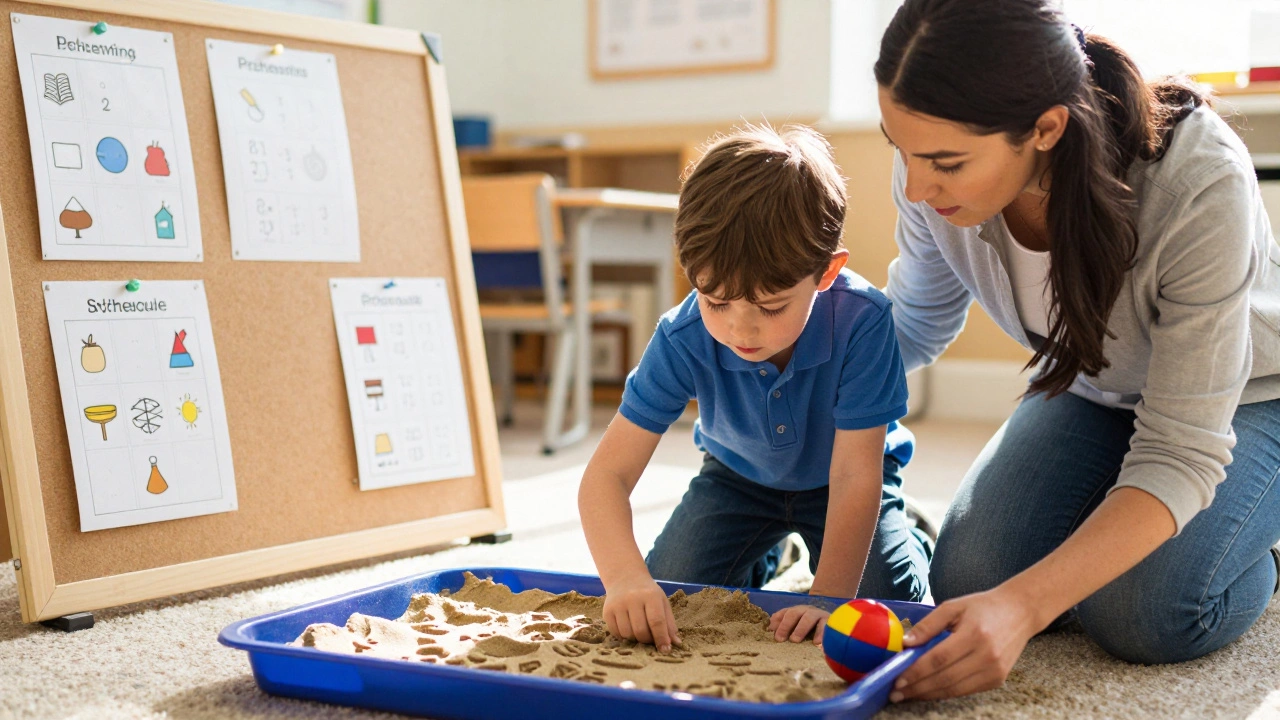
Most kids learn better when more than one sense is involved. For children with learning differences, this isn’t a nice-to-have-it’s essential.Teach spelling by tracing letters in sand. Practice math with coins and real grocery prices. Turn fractions into pizza slices. Use rhythm and movement for memorizing facts-clap the syllables in vocabulary words, jump on numbered mats to solve equations.
Research from the National Center for Learning Disabilities shows that multi-sensory approaches improve retention by up to 70% for students with dyslexia and other learning challenges. It’s not magic. It’s neuroscience. When you engage sight, sound, touch, and motion, you give the brain multiple pathways to store information.
Communicate clearly and patiently
Language matters. Avoid abstract phrases like "Try harder" or "Just focus." These are confusing and frustrating. Instead, say: "Let’s take three deep breaths together. Then we’ll start the first problem."Use short sentences. Give one instruction at a time. "Put your pencil down. Look at me." Not: "Put your pencil down, look at me, and get ready to listen."
For nonverbal children, use picture cards, communication boards, or apps like Proloquo2Go. Don’t assume silence means disengagement. A child who doesn’t speak might be fully tuned in-just expressing themselves differently.
Collaborate with the team
No one person can do this alone. Success comes from teachers, therapists, parents, and sometimes even peers working together.Hold monthly check-ins-not formal IEP meetings, but casual conversations. Ask: "What worked this week? What felt hard? What did the child enjoy?" Share observations. A teacher might notice the child draws calm faces after music class. A parent might say they sleep better after a weighted blanket at night. Put those pieces together.
Therapists aren’t just there to fix problems-they’re partners in understanding. An occupational therapist might suggest fidget tools. A speech therapist might teach you how to use visual supports. A behavior specialist might help you decode tantrums as communication, not defiance.
Focus on strengths, not deficits
It’s easy to get stuck on what a child can’t do. But progress happens when you build on what they can.One student with Down syndrome couldn’t write his name but loved organizing colored blocks. His teacher turned that into a math activity: sorting by color, counting groups, creating patterns. Within months, he was counting to 20 and recognizing number symbols.
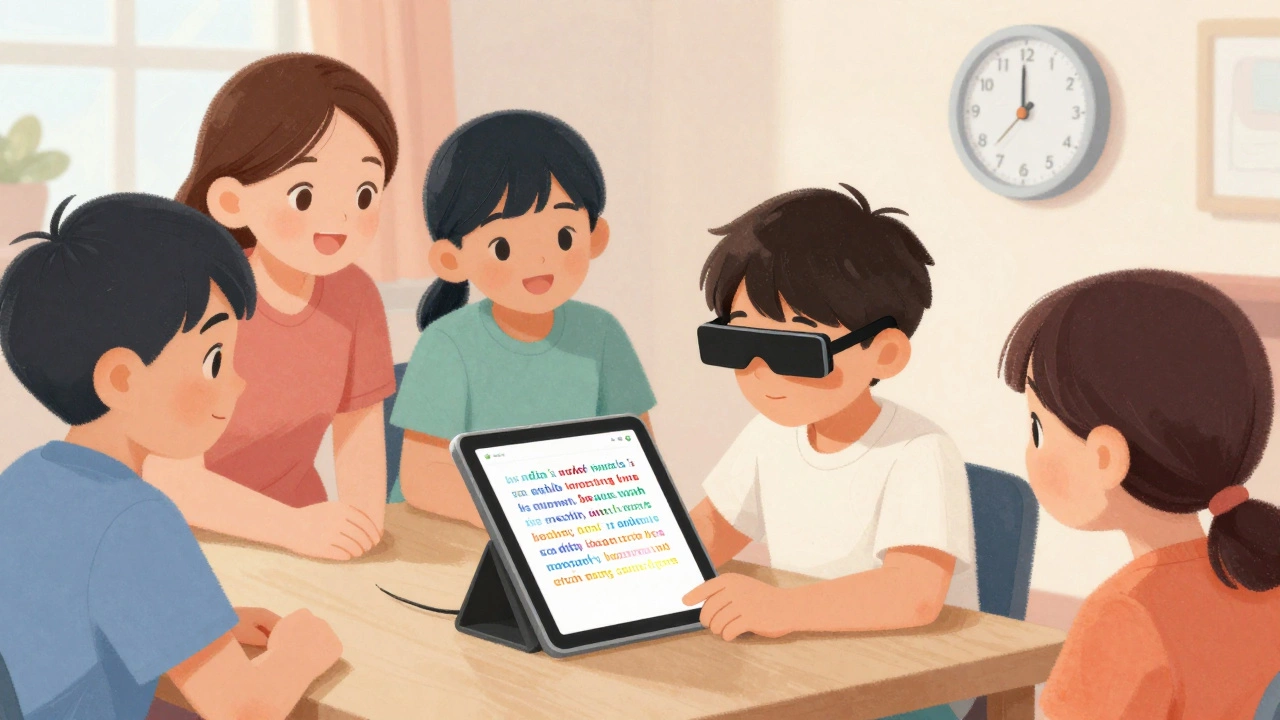
Another girl with cerebral palsy couldn’t hold a pencil but could operate a tablet with eye-tracking software. She started writing stories-short ones at first, then longer. Her classmates asked her to read them aloud. Suddenly, she wasn’t the girl who needed help. She was the storyteller.
Strength-based approaches don’t ignore challenges. They refuse to let challenges define the child.
Adjust expectations, not potential
Expectations should be high-but realistic. Not "Can they read at grade level?" but "What does progress look like for them?"For one child, progress might mean sitting through a 10-minute lesson without leaving the room. For another, it’s asking for help instead of screaming. For a third, it’s tying their own shoes after six months of practice.
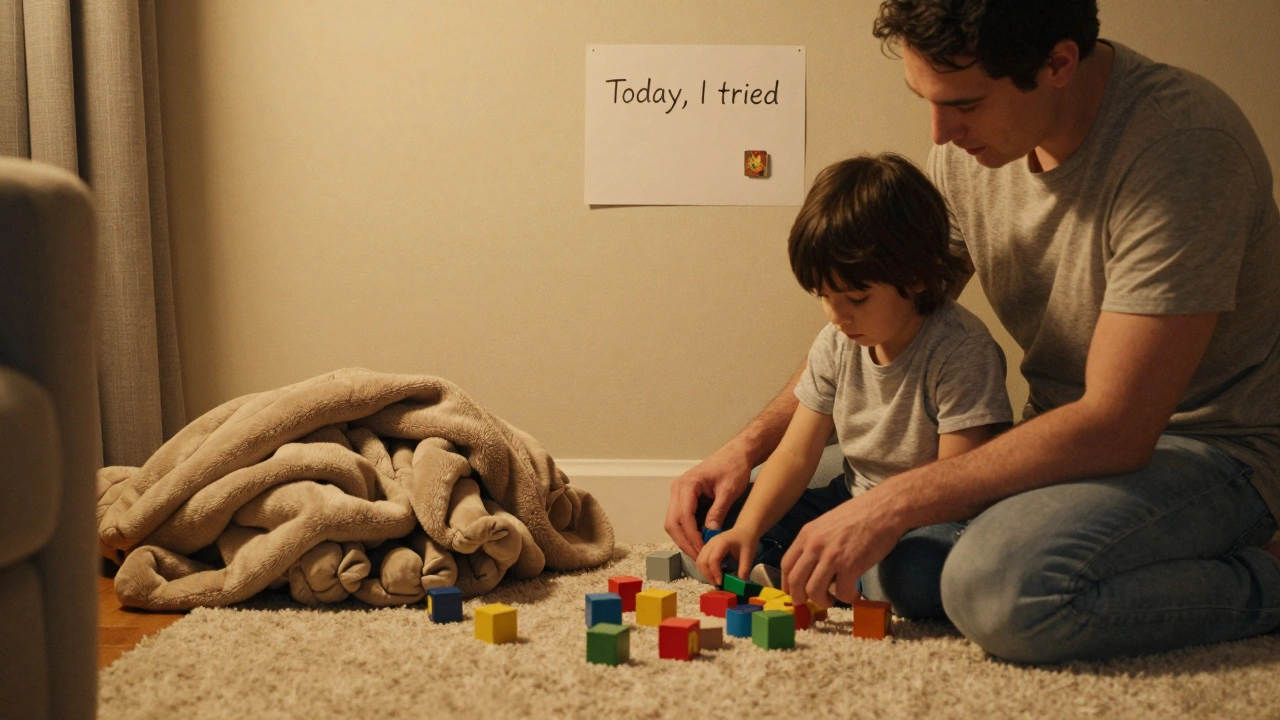
Track small wins. Use a simple chart: "Today, I tried," "I asked for help," "I stayed calm." Celebrate those. Progress isn’t always loud. Sometimes it’s quiet. Sometimes it’s slow. But it’s still progress.
Take care of yourself
You can’t pour from an empty cup. Supporting children with special needs is emotionally and physically demanding. Burnout is real.Set boundaries. Say no when you’re overwhelmed. Ask for help. Take five minutes to breathe between lessons. Talk to other parents or teachers who get it. Join a support group-online or in person.
When you’re exhausted, your patience wears thin. And children with special needs sense that. They don’t need perfect. They need present. And you can’t be present if you’re running on fumes.
It’s not about fixing them-it’s about growing with them
Handling children with special needs isn’t about making them fit into a mold. It’s about reshaping the environment so they can grow in their own way. Every child has the right to learn, to belong, to be heard.There’s no magic formula. But there are simple truths: listen more, judge less, adapt often, celebrate small steps, and never stop believing in their capacity to learn. The world doesn’t need more children who fit in. It needs more who stand out-in their own time, in their own way.
What’s the difference between special needs education and inclusive education?
Special needs education often means separate classrooms or pull-out services designed specifically for children with disabilities. Inclusive education means placing those same children in general classrooms with appropriate supports-like aides, modified materials, or assistive tech. Inclusion doesn’t mean no extra help; it means help comes to them, not the other way around. Research shows inclusive settings improve social skills and academic outcomes for all students, not just those with special needs.
How do I know if my child needs an IEP?
An Individualized Education Program (IEP) is a legal document that outlines specific supports for a child with a disability that affects their learning. If your child struggles significantly in school despite extra help-if they’re falling behind, avoiding tasks, or showing emotional distress related to school-they may qualify. Talk to the school’s special education coordinator. They’ll guide you through an evaluation process. You don’t need a medical diagnosis to start the conversation.
What are common mistakes parents and teachers make?
One big mistake is assuming silence means understanding. Another is pushing too hard for "normal" outcomes-like reading at grade level-instead of celebrating personal progress. Some adults lower expectations too much, thinking kindness means protection. But children with special needs need high expectations paired with real support. Also, skipping collaboration: teachers, therapists, and parents who work in silos create gaps in care.
Can technology help children with special needs?
Yes, and it’s becoming more accessible. Text-to-speech apps help kids with dyslexia. Speech-generating devices support nonverbal children. Visual timers reduce anxiety around transitions. Adaptive keyboards and eye-tracking software open up writing and learning for those with physical disabilities. Tools like Google Read & Write, Proloquo2Go, and Classcraft are used in classrooms worldwide. The key is matching the tool to the child’s specific need-not just using tech because it’s trendy.
How do I help siblings of children with special needs?
Siblings often feel overlooked. They might be proud of their brother or sister, but also resentful of the extra attention. Talk openly. Give them space to express frustration without judgment. Schedule one-on-one time with them-even 15 minutes a week. Involve them in simple ways: letting them help choose a book to read together, or letting them explain a game to their sibling. When siblings feel seen, the whole family benefits.