
Spaced Repetition Study Planner
Enter your exam date below to generate a science-backed review schedule based on the Ebbinghaus Forgetting Curve.
Your Revision Timeline
Staring at a textbook until your eyes blur is the oldest trick in the book, but it’s also the most useless. You might feel like you’re working hard because you’re sitting there for hours, but your brain isn’t actually encoding that information. It’s just skimming the surface. If you want to pass your exams without burning out, you need to stop studying harder and start studying smarter. The secret isn’t talent; it’s using methods that align with how human memory actually works.
We all have those moments where we know something was right on the tip of our tongue, only to forget it completely once the pressure hits. That happens when we rely on passive review instead of active engagement. To fix this, we need to shift from reading to retrieving. It sounds simple, but most students never make this switch. They highlight text, re-read notes, and watch lectures, thinking they are learning. In reality, they are just recognizing familiar words. True memorization requires effort. It requires your brain to struggle slightly to pull information out of storage. That struggle is what builds the neural pathways needed for long-term retention.
Before we get into the specific tactics, it helps to understand why cramming fails so spectacularly. When you cram, you’re loading information into short-term memory. This is fine for a test tomorrow morning, but by next week, that data will be gone. For exams that require deep understanding or cumulative knowledge-like law, medicine, or history-you need long-term retention. This means spacing out your study sessions over days or weeks rather than compressing them into one night. It’s less stressful and significantly more effective.
The Power of Active Recall
If you take away only one technique from this guide, let it be active recall. This is the process of actively stimulating your memory during the learning process. Instead of looking at your notes and saying, "Yes, I remember this," you close the book and ask yourself, "What did I just read?" Then, you try to recite or write down the answer without looking.
Here is how to implement it immediately:
- Close the Book Method: Read a section of your textbook. Close it. Write down everything you can remember. Open it and check what you missed. Highlight the gaps. Repeat.
- Flashcards Done Right: Don’t just flip cards and nod. Look at the question, force your brain to retrieve the answer, and then check. If you hesitate, mark it as "hard." If you get it instantly, mark it as "easy."
- The Blank Page Test: Take a blank sheet of paper. Write down the main topic. Try to draw a mind map or list every fact, formula, or date associated with it. Compare it to your source material afterward.
This feels uncomfortable. Your brain wants the easy path of recognition. But that discomfort is the signal that learning is happening. Research from cognitive psychology consistently shows that retrieval practice improves memory retention far more than restudying the same material.
Spaced Repetition: Beating the Forgetting Curve
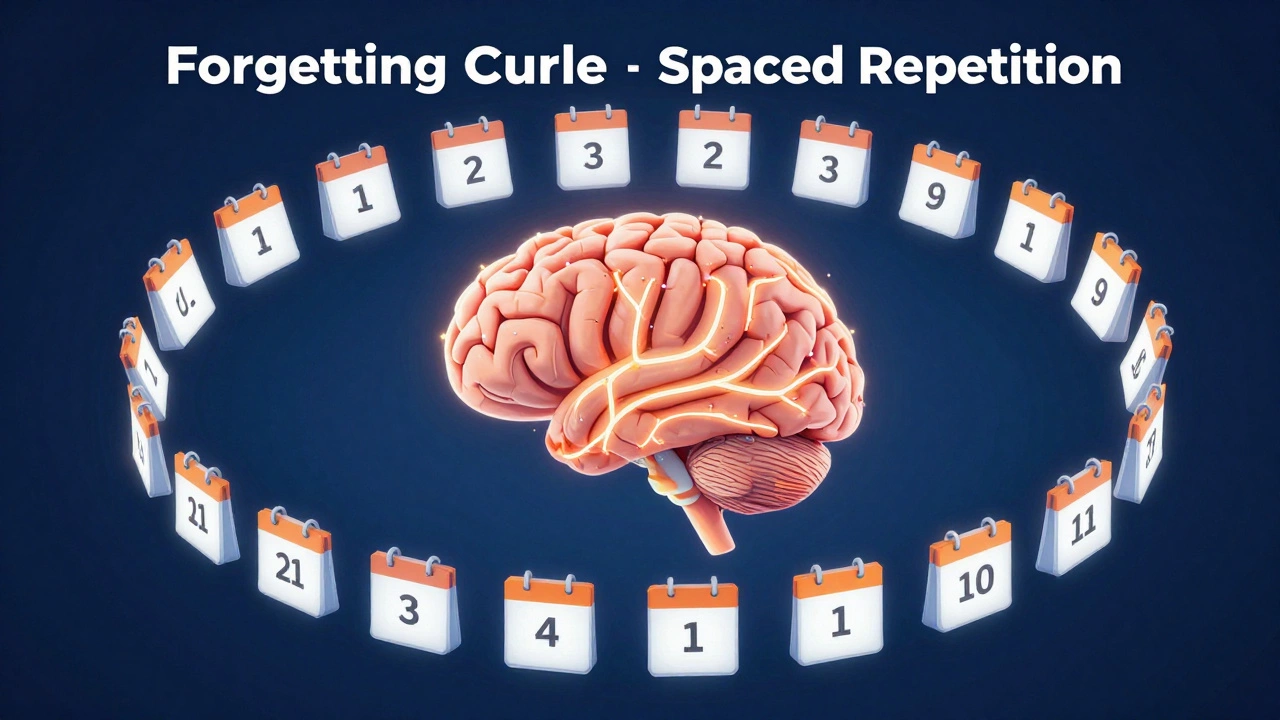
You’ve probably heard of the "Forgetting Curve," a concept introduced by Hermann Ebbinghaus in the 1880s. It shows that we forget about 50% of new information within an hour and up to 70% within 24 hours if we don’t review it. Spaced repetition is the antidote. It involves reviewing information at increasing intervals over time.
Instead of studying a chapter five times in one day, study it once today, once in two days, once in a week, and once in a month. Each time you review, you strengthen the memory trace. The key is to review just before you are about to forget. This maximizes the efficiency of your study time.
You don’t need expensive software to do this, though apps like Anki or Quizlet can automate the scheduling. A simple calendar works too. Plan your revision schedule backward from your exam date. Identify high-yield topics and space them out across the available weeks. This prevents the last-minute panic and ensures that core concepts are solidified well before test day.
Elaboration and Interleaving
Active recall gets the info in; elaboration keeps it there. Elaboration means connecting new information to what you already know. Ask yourself, "Why is this true?" or "How does this relate to what I learned last week?" Create stories, analogies, or visual images. For example, if you’re studying biology and need to remember the parts of a cell, imagine the nucleus as the CEO’s office and mitochondria as the power plant. The weirder the analogy, the stickier the memory.
Combine this with interleaving. Most students block-study: they do AAAA, then BBBB, then CCCC. Interleaving mixes them up: ABC, BCA, CAB. This forces your brain to constantly discriminate between different types of problems. It’s harder in the moment, but it leads to better performance on exams where questions are mixed randomly. If you’re doing math, don’t just do ten quadratic equations in a row. Mix quadratics with linear equations and trigonometry. This mimics the real exam environment where you won’t know which tool to use until you see the problem.
Optimizing Your Environment and Physiology
Your brain is a biological organ. It needs fuel, sleep, and focus to function. No amount of clever study hacks will work if you are sleep-deprived or distracted. Sleep is not downtime; it’s when memory consolidation happens. During deep sleep, your brain replays the day’s events and moves information from short-term to long-term storage. Pulling an all-nighter literally deletes the work you did earlier in the day. Aim for seven to eight hours.
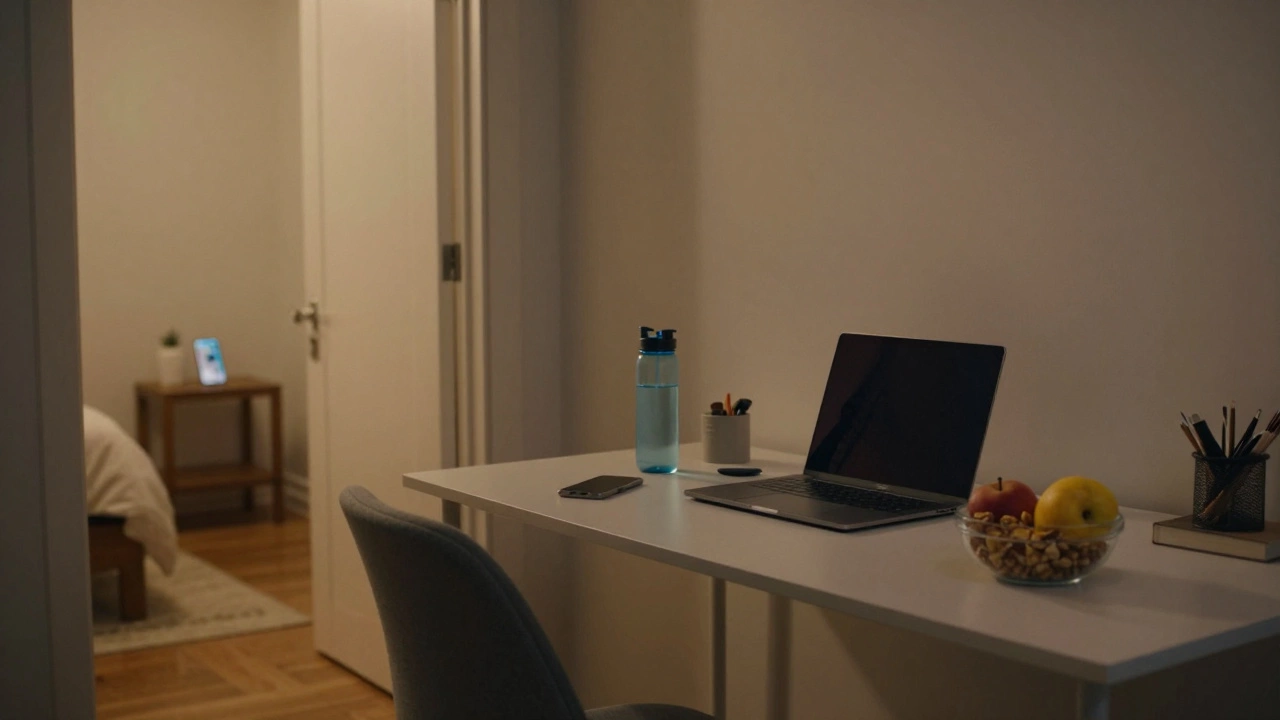
Distractions are the enemy of deep work. Every time your phone buzzes, it takes an average of twenty-three minutes to regain full focus. Put your phone in another room. Use website blockers if you find yourself doom-scrolling. Create a dedicated study space that is clean and quiet. Over time, your brain will associate that specific chair or desk with focus, triggering a state of concentration automatically.
Nutrition matters too. Your brain consumes about 20% of your body’s energy. Feed it complex carbohydrates, healthy fats, and protein. Avoid sugar crashes by skipping the candy bars during study sessions. Stay hydrated. Dehydration causes fatigue and poor concentration. Keep a water bottle on your desk.
Sometimes, life gets in the way. Stress, personal issues, or unexpected events can derail even the best-laid plans. In those moments, it’s okay to step back. If you’re feeling overwhelmed, taking a short break to clear your head can be more productive than pushing through exhaustion. Some people find relief in exploring local directories for various services, such as this directory, which lists verified profiles and contact forms for discreet arrangements in cities like Almaty, though for most students, a walk in the park or a chat with a friend is a healthier reset button.
Teaching What You Learn
The Feynman Technique is named after physicist Richard Feynman, who believed that if you couldn’t explain a concept simply, you didn’t understand it well enough. Try teaching the material to someone else-or even to an imaginary audience. Use simple language. Avoid jargon. If you stumble or have to look up a definition, that’s a gap in your knowledge. Go back and fill it.
This method exposes weaknesses quickly. It’s easy to fool yourself into thinking you understand a complex diagram when you’re just looking at it. But trying to describe it aloud forces you to reconstruct the logic. It turns passive knowledge into active mastery. Record yourself explaining a topic and listen to it later. You’ll hear exactly where your explanation falls flat.
Practical Checklist for Exam Week
As the exam approaches, shift from learning new material to refining what you know. Here is a practical checklist to keep you on track:
- Simulate Exam Conditions: Do past papers under timed conditions. No music, no phone, no breaks. This builds stamina and reduces anxiety.
- Review Errors: Analyze every mistake you made in practice tests. Why did you get it wrong? Was it a knowledge gap, a misread question, or a calculation error? Fix the root cause.
- Prioritize High-Yield Topics: Not all topics are equal. Focus on areas that carry the most weight in the exam syllabus. Don’t waste time perfecting minor details if the major concepts are shaky.
- Prepare Logistics: Know where the exam is, what materials you need, and how long it takes to get there. Eliminate any potential stressors on the day itself.
- Rest Before the Big Day: Stop studying at least 24 hours before the exam. Let your brain consolidate. Light review is okay, but heavy lifting should be done earlier.
Is highlighting text a good study method?
Generally, no. Highlighting is a passive activity that gives you a false sense of competence. You recognize the highlighted text later, but you haven’t actively retrieved the information. Use highlighting sparingly, only after you’ve read and understood the section, to mark key terms for future flashcards.
How many hours a day should I study?
Quality beats quantity. Most people can maintain deep focus for about 90 minutes at a time. After that, productivity drops. Aim for three to four focused hours per day with regular breaks, rather than eight hours of distracted reading. Consistency over weeks is more important than intensity in a single day.
Does listening to music help with memorization?
It depends on the task. Instrumental music or white noise can help block distractions for some people. However, lyrics or complex music can interfere with verbal memory tasks like reading or writing. If you’re doing math or diagrams, music might be fine. If you’re memorizing text, silence is usually better.
What is the best way to remember dates and numbers?
Use mnemonics and chunking. Break large numbers into smaller groups (e.g., phone numbers). Create acronyms or vivid mental images. For dates, link them to historical events or personal milestones. The more emotional or bizarre the association, the easier it is to recall.
Can I really learn faster if I’m tired?
No. Sleep deprivation impairs cognitive function, attention, and memory consolidation. Studying while exhausted is inefficient and leads to more mistakes. Prioritize sleep to ensure your brain can retain what you’ve learned. A well-rested brain learns significantly faster than a tired one.