Behavior Management in Early Childhood: Practical Strategies for Nurseries and Parents
When we talk about behavior management, the process of guiding children to understand and regulate their actions in social settings. Also known as positive discipline, it’s not about control—it’s about helping little ones learn how to express themselves safely and respectfully. At behavior management in a nursery isn’t about stopping bad behavior. It’s about teaching kids why certain actions don’t work and what they can do instead. This happens every day in quiet moments: when a toddler shares a toy after being shown how, when a child uses words instead of hitting, or when they learn to wait their turn during circle time.
Good behavior management in preschools ties directly to child development, the physical, emotional, social, and cognitive growth children experience from birth through early school years. Kids aren’t misbehaving because they’re ‘bad’—they’re often overwhelmed, tired, confused, or still learning how to communicate. A child who throws toys might not know how to say they’re frustrated. A child who won’t sit still might need more movement to focus. That’s why routines, clear expectations, and consistent responses matter more than punishments. When nurseries use calm, predictable guidance, kids feel safe enough to try again. And when they do, their confidence grows.
Parents and teachers who get this right don’t need fancy tools or expensive programs. They use simple, repeatable methods: naming emotions ("I see you’re upset because you wanted the red block"), offering choices ("Do you want to put away the blocks or the books first?"), and modeling patience. The goal isn’t perfect obedience—it’s self-regulation. And that takes time. What works in a nursery setting also works at home: short, clear rules, positive reinforcement, and lots of hugs when things fall apart.
You’ll find posts here that dig into real situations—like how one nursery reduced tantrums by changing their transition routines, or how a parent learned to respond differently when their child hit at playgroup. These aren’t theories. They’re stories from classrooms and kitchens where adults figured out what actually helps children grow. Whether you’re a teacher, a parent, or just someone who spends time with little kids, you’ll find tools here that work on Monday morning when the coffee’s cold and the toddler’s screaming.
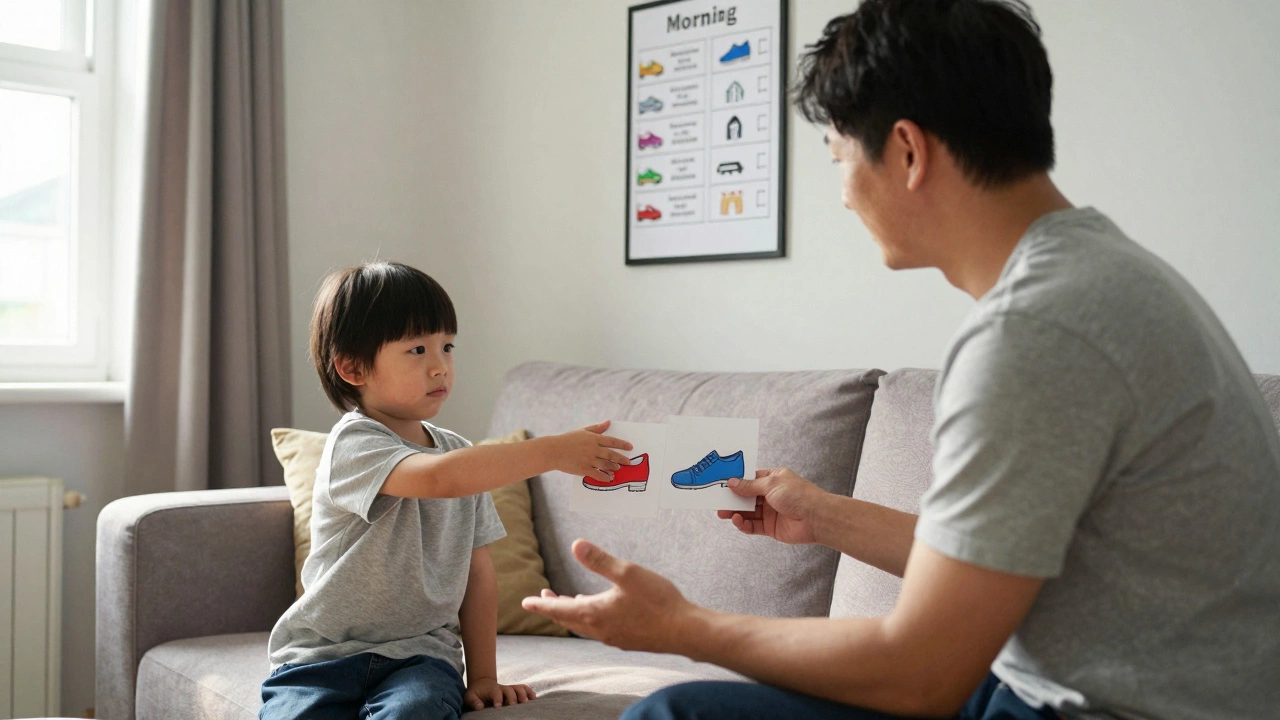
How to Deal with a Defiant Special Needs Child: Practical Strategies That Work
Learn practical, science-backed ways to reduce defiance in children with special needs. Discover how visual schedules, choice-making, and calm communication can transform daily challenges into moments of connection.