
Visual Schedule Builder for Special Needs Children
How Visual Schedules Help
According to the article, visual schedules reduce defiance by giving children predictability. Research shows children with developmental delays show 60% less outbursts when given choice options and clear routines. This tool helps you create personalized schedules that communicate exactly what to expect.
Build Your Schedule
Your Schedule Preview
Your schedule will appear here
When a child with special needs throws a tantrum, refuses to follow simple instructions, or screams during routine tasks, it’s easy to feel like you’re failing. But defiance in these children isn’t about power struggles or bad parenting-it’s often a cry for help, a response to sensory overload, or a way to communicate when words fail. You’re not alone. Thousands of parents and caregivers in Ireland and beyond face this daily. The good news? There are proven ways to reduce defiance, build trust, and create calmer days.
Understand Why the Defiance Happens
Defiance in children with autism, ADHD, intellectual disabilities, or sensory processing disorders rarely comes out of nowhere. It’s usually a symptom of something deeper. A child who refuses to get dressed might be overwhelmed by the texture of the fabric. A child who slams doors during homework could be struggling with executive dysfunction-meaning their brain can’t start or organize tasks, no matter how hard they try. Research from the National Autistic Society shows that over 70% of children with autism display oppositional behaviors not because they’re being ‘difficult,’ but because they’re experiencing anxiety or sensory distress. For a child with ADHD, defiance often looks like ignoring requests because their brain filters out verbal instructions unless they’re short, clear, and paired with visual cues. Stop asking, “Why won’t they listen?” and start asking, “What are they trying to tell me?”Reduce Demands, Increase Control
One of the biggest triggers of defiance is feeling powerless. When a child is constantly told what to do, when to do it, and how to do it, their brain goes into survival mode. They push back-not to be bad, but to regain a sense of control. Try this: Offer two choices instead of giving an order. Instead of saying, “Put on your shoes,” say, “Do you want to wear the blue shoes or the red ones?” This gives them autonomy within boundaries. For nonverbal children, use picture cards: show two images of shoes and let them point. A study from the University of Dublin’s Special Education Research Unit found that children with developmental delays showed a 60% reduction in outbursts when given two-choice options throughout the day. It’s not about letting them run the house-it’s about letting them make small, safe decisions.Use Visual Schedules and Routines
Predictability is calming. A child who doesn’t know what’s coming next will often act out to test the environment. A visual schedule-using photos, drawings, or symbols-tells them what to expect, step by step. Create a simple morning routine board: wake up → brush teeth → get dressed → eat breakfast → go to school. Use Velcro or magnets so they can move each picture to a “done” column. This turns abstract time into something they can see and touch. One mother in Cork shared that her 8-year-old son with Down syndrome used to scream every morning when it was time to leave the house. After adding a visual schedule with a photo of their car and a sticker reward for completing the routine, the meltdowns dropped to once a week-and then disappeared.Communicate Clearly and Calmly
Long instructions, raised voices, and emotional reactions make defiance worse. Speak in short sentences. Use simple words. Say one thing at a time. Instead of: “It’s time to clean up your toys, put on your coat, grab your lunchbox, and line up because we’re leaving in five minutes,” Say: “Time to put your toys in the box.” Wait. Let them process. Then: “Now, put on your coat.” Pause again. Don’t rush. If they’re overwhelmed, give them a minute to breathe. Use a calm tone-even if you’re frustrated inside. Your voice is a safety signal. For children who don’t respond to verbal cues, try using a visual timer (like a sand timer or a digital app with a countdown). When the timer ends, the task ends. This removes the power struggle over “how long.”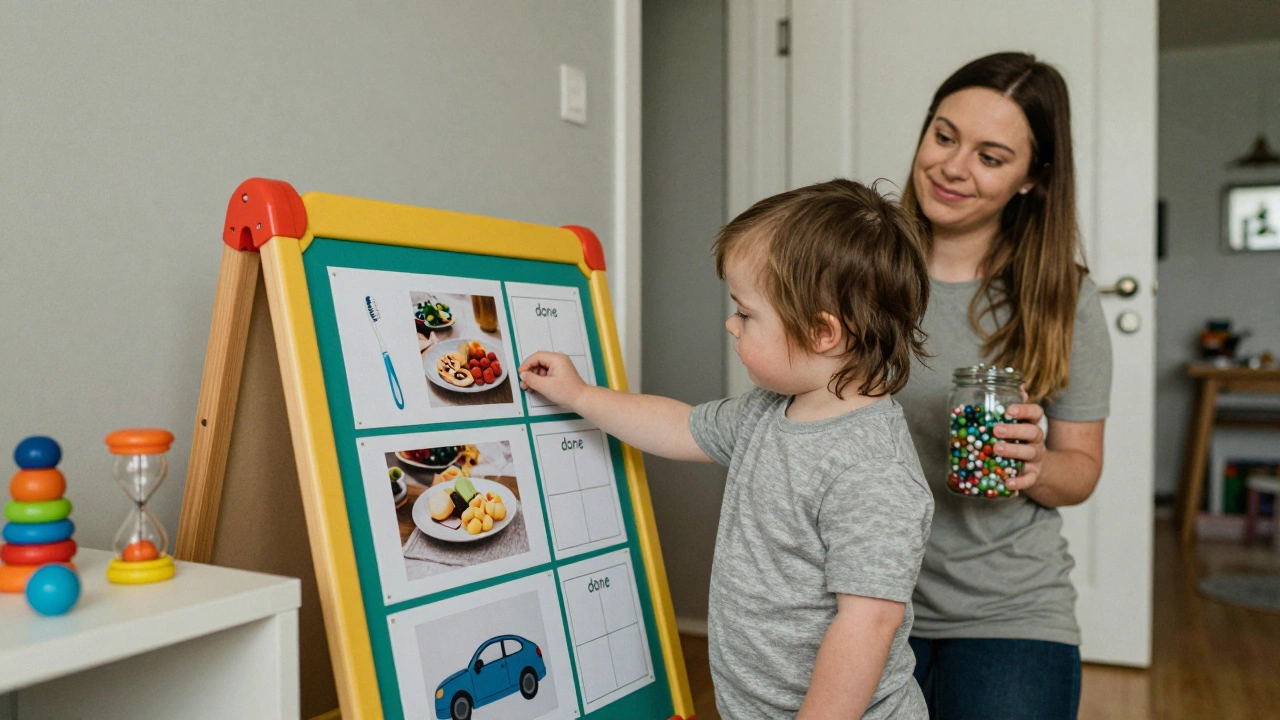
Build Connection Before Correction
You can’t fix behavior if the child doesn’t feel safe with you. Before you ask them to do something hard, connect first. Sit beside them. Say something positive. “I like how you colored the sky so bright today.” This isn’t flattery-it’s brain science. When a child feels emotionally safe, their nervous system shifts out of fight-or-flight mode. Their prefrontal cortex (the part that controls impulses and reasoning) becomes more active. That’s when learning and cooperation can happen. One teacher in Limerick started spending 3 minutes every morning just playing with her student who had severe anxiety. No talking. No demands. Just stacking blocks. Within three weeks, the child stopped hiding under the desk during lessons.Use Positive Reinforcement, Not Punishment
Punishments like time-outs, yelling, or taking away toys often make defiance worse. They teach the child that the world is hostile. They don’t teach them how to behave better. Instead, catch them being good-even if it’s small. “You put your plate in the sink without being asked. That was helpful.” Use a reward system that’s visual and immediate. A sticker chart works. So does a jar of marbles. Every time they complete a task without a meltdown, add a marble. When the jar is full, they choose a small reward-a trip to the park, extra story time, a favorite snack. The key? Rewards must be meaningful to the child, not what you think they should want. Some kids love quiet time with a flashlight and shadows. Others want to help bake cookies. Tailor it.Manage Your Own Stress
You can’t pour from an empty cup. If you’re exhausted, anxious, or overwhelmed, your child will sense it-and it’ll fuel their defiance. You don’t have to be perfect. You just have to be present. Take five minutes a day to breathe. Walk around the block. Call a friend. Use a free app like Calm or Insight Timer. Even 60 seconds of deep breathing resets your nervous system. In Dublin, parent support groups like Special Needs Ireland meet weekly. You don’t have to do this alone. Talking to others who get it reduces shame and gives you real tools-not theory.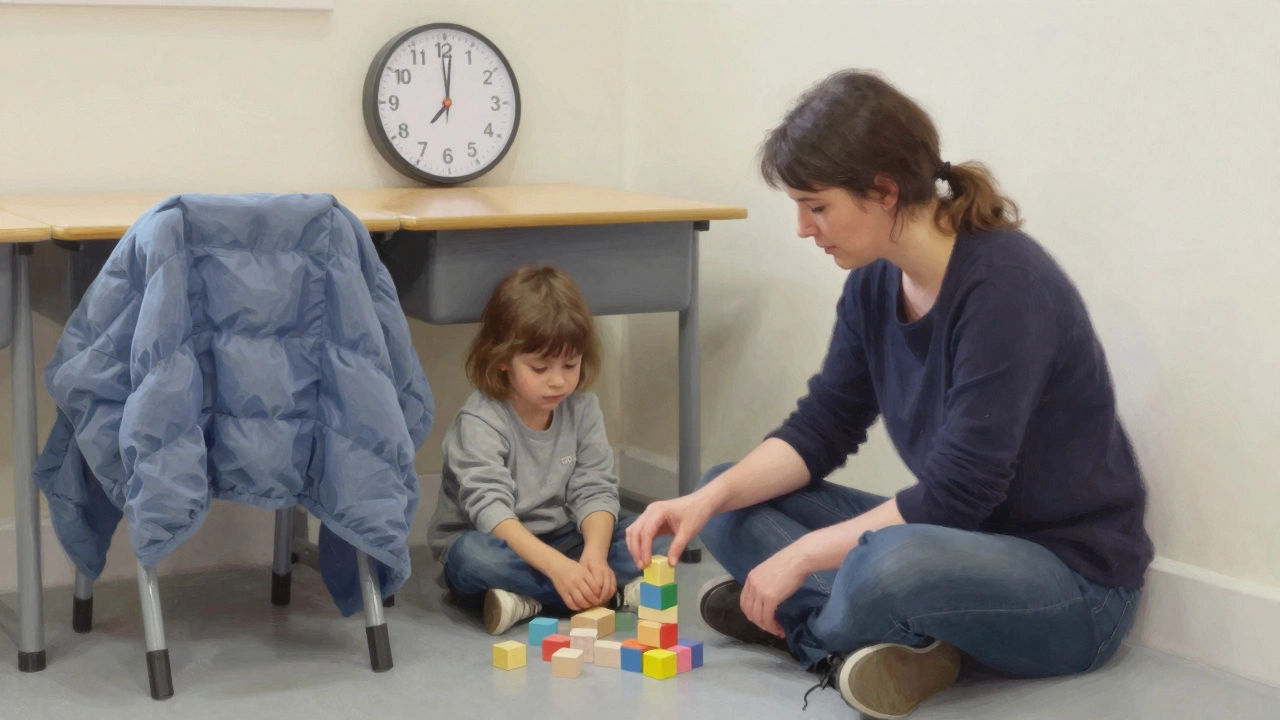
When to Seek Professional Help
If defiance is constant, violent, or lasts more than six months despite your efforts, it’s time to reach out. A child behavior therapist, occupational therapist, or developmental pediatrician can help identify underlying causes: is it sensory processing disorder? Anxiety? A communication delay? In Ireland, the HSE offers free assessments for children with developmental concerns. Your GP can refer you. Schools also have Special Educational Needs Organisers (SENOs) who can help arrange support. Don’t wait until things are out of control. Early intervention makes a huge difference. A child who learns coping skills at age 6 will have a far easier time in adolescence than one who’s been labeled “unmanageable” for years.What Not to Do
- Don’t argue. “You always do this!” or “Why won’t you listen?” only fuels the fire. - Don’t give in to tantrums. It teaches them that screaming works. Instead, stay calm, wait it out, then repeat the request once they’re quiet. - Don’t compare them to other kids. Their brain works differently. Their progress isn’t linear. - Don’t ignore your own needs. Your well-being matters as much as theirs.Real Progress Takes Time
There’s no magic fix. You won’t wake up one day and find your child suddenly obedient. But you will notice small shifts: fewer meltdowns, more eye contact, a willingness to try a new task without screaming. One father in Galway told me his 10-year-old son with autism used to scream every time he saw a toothbrush. After six months of using a soft brush, playing music during brushing, and letting him choose the toothpaste flavor, he now brushes without a word. That’s not luck. That’s consistency. That’s patience. That’s love with strategy. You’re doing better than you think. Keep going.Is defiance normal for children with special needs?
Yes, defiance is common-but it’s not the same as typical childhood tantrums. In children with autism, ADHD, or sensory disorders, defiance often stems from anxiety, sensory overload, or difficulty communicating needs. It’s a form of communication, not disobedience.
Should I use time-outs for a defiant special needs child?
Time-outs often backfire. Many children with special needs find isolation frightening or confusing. Instead of removing them from the situation, try a quiet space with calming tools-like a weighted blanket, noise-canceling headphones, or a sensory toy. Focus on regulation, not punishment.
How do I get my child to listen without yelling?
Use short, clear instructions. Pair them with visuals. Get down to their eye level. Wait for a response. If they don’t respond, give them 10 seconds, then repeat once. Avoid long lectures. Your calm tone matters more than your words.
Can diet affect defiant behavior?
Some children show changes in behavior with food sensitivities-especially to sugar, artificial colors, or gluten. While there’s no universal diet that fixes defiance, keeping a food and behavior journal for two weeks can reveal patterns. Talk to a pediatric nutritionist before making big changes.
What should I do if my child hits or kicks during a meltdown?
Stay calm. Don’t hold them unless they’re in danger. Say, “I’m not going to let you hurt me,” and move to safety. Afterward, offer a quiet space. Once they’re calm, talk about what triggered it. Work with a behavior specialist to create a safety plan. Physical aggression is a sign of distress, not evil intent.
How long does it take to see improvement?
Most families see small changes within 2-4 weeks of consistent strategy use. Major shifts take 3-6 months. Progress isn’t linear. Some days will be harder. Keep going. Small wins add up.